






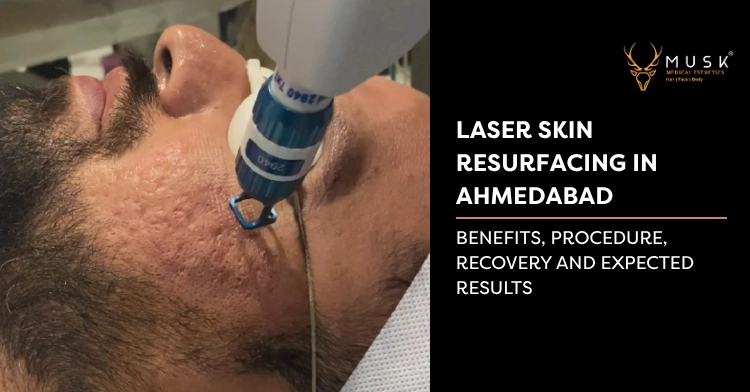
Laser Skin Resurfacing in Ahmedabad: Benefits, Procedure, Recovery and Expected Results
 By Pooja Sharma
 If years of sun exposure, acne scarring, or fine lines have left your skin looking uneven in texture or tone, and surface-level facials no longer make a visible difference, laser skin resurfacing is one of the more established options worth understanding properly before booking anything. Unlike a facial or a light peel, it works by prompting the skin to rebuild itself at a deeper level, which is also why it comes with real recovery time and needs to be planned rather than booked on a whim.
It helps to know where this treatment sits relative to gentler options first. If your main concern is dullness or mild texture rather than deep scarring or wrinkles, a lighter resurfacing method may do the job with far less downtime, a comparison covered in HydraFacial Vs Medi-Facial Vs Chemical Peel. Laser skin resurfacing tends to make sense once the concern is more established, such as visible acne scarring, deeper fine lines, or long-standing sun damage.
One consideration that generic international guides often skip is skin tone. Laser settings and the specific laser type matter more for Indian skin than they do for the lighter skin types most Western content is written for, since darker skin carries a higher risk of post-treatment pigmentation changes if the treatment is not matched carefully to the individual. This is one of the first things worth discussing at a consultation rather than assuming any laser is equally suited to any skin type.
This guide covers how laser skin resurfacing works, its realistic benefits, what the procedure and recovery involve, how long results tend to last, general cost factors in Ahmedabad, and who should hold off on this particular treatment.
Key Takeaways
- Laser skin resurfacing works by prompting deeper skin renewal, not just surface exfoliation. The laser either removes or heats layers of skin to trigger new collagen and fresh skin cell growth underneath.
- There are two broad categories, ablative and non-ablative. Ablative lasers remove the surface layer for more dramatic results and longer downtime, while non-ablative lasers heat tissue without removing it, offering a gentler recovery with more modest results.
- Skin tone genuinely affects laser selection. Darker skin types carry a higher risk of post-treatment pigmentation changes, so the specific laser and settings should be matched to the individual rather than treated as one-size-fits-all.
- Recovery ranges from a few days to a few weeks. Non-ablative treatments involve minimal downtime, while fractional or fully ablative lasers can require one to three weeks of visible healing.
- Results build gradually over months, not days. While surface smoothness often appears within a couple of weeks, collagen remodeling continues for three to six months after treatment.
- This is not a one-and-done fix for ongoing aging. Results address existing damage effectively, but continued sun exposure and natural aging mean skincare and sun protection matter for maintaining them.
- Not everyone is a good candidate at every point in time. Active acne breakouts, active cold sores, certain medications, and unmanaged skin conditions are reasons a specialist may recommend waiting or choosing a different treatment.
- Cost depends on laser type, treatment area, and number of sessions. Ablative treatments are often priced higher per session but need fewer sessions, while non-ablative treatments are typically lower per session but require a longer course.
What Is Laser Skin Resurfacing and How Does It Work?
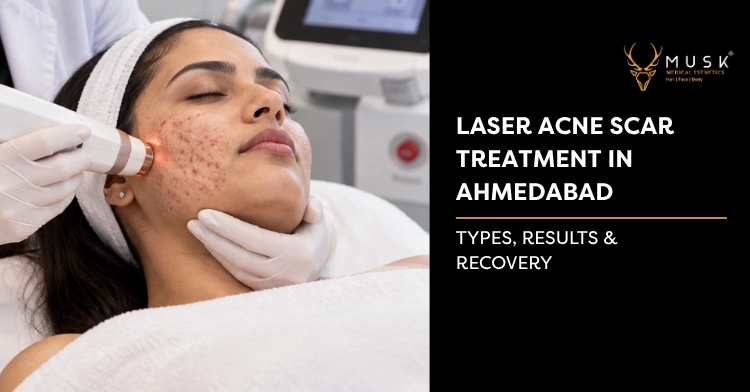
Laser skin resurfacing uses concentrated light energy to remove or heat damaged outer layers of skin, prompting the body to generate new, healthier skin cells and additional collagen underneath. As the treated area heals, the resulting skin generally looks tighter, smoother, and more even in tone than before.
Ablative Lasers
Ablative lasers, most commonly CO2 or Erbium, remove the outermost skin layer directly. This produces more dramatic improvement for deeper wrinkles, significant scarring, or pronounced sun damage, but comes with a longer, more involved recovery since the skin surface itself needs to heal.
Non-Ablative Lasers
Non-ablative lasers, including certain fractional and pulsed-light devices, heat the tissue beneath the surface without removing the top skin layer. Recovery is considerably shorter, though results tend to be more gradual and typically require a longer course of sessions to reach a comparable outcome.
What Are the Benefits of Laser Skin Resurfacing?
Laser skin resurfacing is most used to address fine lines and wrinkles, acne scarring, sun-induced age spots, enlarged pores, and uneven skin texture or tone. It works by stimulating collagen production in the deeper layers of skin, which is why improvements continue to develop for months after the visible healing is complete.
Musk Clinic's laser skin resurfacing page outlines how this treatment is often planned alongside other facial procedures for patients addressing more than one concern at once, though which combination makes sense depends entirely on individual goals discussed during a consultation.
Is Laser Skin Resurfacing Safe for Indian Skin Tones?
Factor | Ablative Laser | Non-Ablative Laser |
Mechanism | Removes the outer skin layer directly | Heats tissue beneath the surface without removing it |
Best For | Deeper wrinkles, significant scarring, pronounced sun damage | Mild to moderate texture and tone concerns, early signs of aging |
Typical Downtime | One to three weeks, depending on depth and area treated | Minimal to a few days, depending on the device used |
Sessions Typically Needed | Often one to a few sessions for visible change | A longer course of sessions to reach a comparable result |
Considerations for Darker Skin | Requires careful settings and an experienced practitioner to limit pigmentation risk | Generally lower pigmentation risk, but still benefits from individualized settings |
What Happens During a Laser Skin Resurfacing Procedure?
The procedure itself is a structured, outpatient process performed by a trained facial cosmetic surgeon or dermatologist, and it generally follows the same sequence regardless of which laser type is used.
- A consultation and skin assessment to confirm candidacy and select the right laser type and settings for your skin.
- Pre-procedure guidance, which may include avoiding certain medications and supplements that affect clotting or healing, and stopping smoking several weeks beforehand.
- Application of a topical anesthetic to numb the treatment area before the laser is used.
- The laser treatment itself, where the device passes over the target area in a controlled, precise manner.
- Post-procedure care instructions, including any prescribed antibiotic or antiviral medication to reduce infection risk during healing.
Patients weighing whether resurfacing or a different approach fits their concern can review what a VISIA Face Scan captures, since imaging wrinkles, pores, spots, and sun damage before treatment gives both the patient and the specialist a clearer, more objective starting point than a mirror alone.
What Is Recovery Like After Laser Skin Resurfacing?
Laser Type | Typical Downtime | What to Expect |
Non-ablative | A few days | Mild redness or warmth, minimal disruption to daily activities |
Fractional ablative | About five to ten days | Redness, swelling, and peeling as the skin re-surfaces in treated columns |
Fully ablative | Roughly one to three weeks | More significant redness, swelling, and peeling as the entire treated layer heals |
How Long Do Laser Skin Resurfacing Results Last?
How Much Does Laser Skin Resurfacing Cost in Ahmedabad?
Pricing for laser skin resurfacing depends on the laser type used, the size of the treatment area, and how many sessions are recommended for your specific concern. Ablative treatments are typically priced higher per session but may need fewer sessions overall, while non-ablative treatments are usually lower per session but require a longer course to reach a comparable result. Exact pricing at Musk Clinic should be confirmed during a consultation, since the right laser type and number of sessions depend entirely on an in-person skin assessment rather than a general estimate.
Who Should Avoid Laser Skin Resurfacing?
Laser skin resurfacing is not the right fit for everyone at every point in time. A specialist may recommend waiting or choosing a different treatment if you have active acne breakouts, an active cold sore or history of frequent outbreaks without prior prophylaxis, are on certain medications that affect skin healing, or have a condition that impairs wound healing.
It is also worth knowing that laser resurfacing addresses texture and tone rather than sagging skin. If your primary concern is looseness or laxity rather than scarring or fine lines, a different approach such as the one covered in Thread Lift Vs Facelift Vs Dermal Fillers may be a more relevant starting point, and a consultation can help clarify which concern is actually driving what you see in the mirror.
How Musk Clinic Approaches Skin Resurfacing
Conclusion
Frequently Asked Questions (FAQs)

Dr Pooja Sharma
- 5 Years of Experience