






Traction Alopecia: Causes, Prevention, Symptoms and Best Treatment Options for Hair Regrowth
 By Dr. Anand Shah
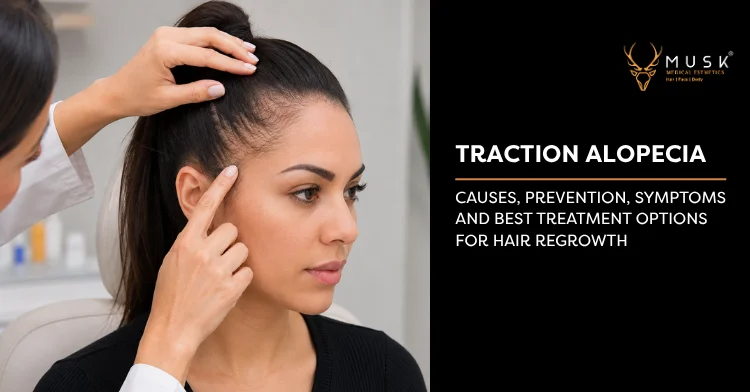
 If your hairline along the temples or edges has been thinning while the rest of your scalp looks normal, and you regularly wear tight braids, a weave, a slicked-back ponytail, or a snug helmet, traction alopecia is worth ruling out before anything else. It is one of the few forms of hair loss that is largely mechanical rather than genetic, caused by repeated pulling force on the hair root rather than hormones or heredity, which is also why it responds very differently to treatment than pattern hair loss does.
Traction alopecia is reported across all ethnicities and genders, though it has been studied most extensively in women of African descent who wear tight braided or relaxed styles, with one dermatology review citing traction alopecia in close to a third of that population. In an Indian context, the same mechanism shows up in patients who regularly wear a tight juda or bun, use hijab pins along the hairline, keep a turban tightly wrapped, or ride two-wheelers in a snug helmet every day. If any of that sounds familiar, the guide to female temple hair loss covers one common presentation of this same pattern in more detail.
The good news is that traction alopecia caught early is usually reversible once the tension stops. The less good news is that left unaddressed, it can progress to permanent scarring, where the follicle itself is destroyed, and hair will not grow back no matter what is applied to the scalp. This is why recognizing the early signs matters more than almost any product or treatment discussed further down.
This guide walks through what actually causes traction alopecia, the early symptoms worth watching for, how the condition progresses in stages, which styling habits are safer, and the treatment options that apply at each stage, from simply changing how you wear your hair to medical therapy and, in scarred cases, hair transplantation.
Key Takeaways
- Traction alopecia is caused by pulling force, not genetics. It results from sustained tension on the hair root from tight hairstyles or headwear, unlike androgenetic alopecia, which is hormonal and hereditary.
- Early traction alopecia is usually reversible. If the tension is removed before scarring sets in, most follicles recover and hair regrowth follows within a few months.
- Scarring makes the damage permanent. Once follicular fibrosis develops, the follicle is destroyed, and topical or oral treatments cannot restart growth in that spot.
- The hairline and temples are the most common trouble spots. Tight braids, ponytails, buns, weaves, and snug headwear concentrate tension along the front and sides of the scalp.
- Early warning signs are easy to miss. Tenderness, small bumps along the hairline, and short broken hairs often appear before any visible bald patch does.
- Prevention is mostly about habits, not products. Alternating hairstyles, loosening tension, and giving the scalp regular breaks matter more than any serum or shampoo.
- Treatment depends entirely on the stage. Early cases often need only a style of change; moderate cases may benefit from minoxidil or PRP, and scarred cases require a different conversation entirely.
- A hair transplant only helps once regrowth is no longer possible naturally. In scarred, advanced cases, restoration options exist, but they must be paired with a permanent change in styling habits.
What Causes Traction Alopecia?
Traction alopecia develops from repeated, sustained tension on the hair shaft and root, strong enough and frequent enough that the follicle cannot fully recover between episodes. A single tight ponytail for one evening is not a concern. The risk builds with hairstyles or headwear that pull in the same direction, on the same follicles, day after day, for months or years.
Common triggers include:
- Tight braids, cornrows, or box braids, particularly when styled with added hair extensions
- High or tight ponytails and buns worn daily, including for sport, dance, or workplace grooming standards
- Weaves and wigs, especially those secured with adhesive or bonding glue that tugs on the hairline
- Locs and twists that become heavy over time, particularly on chemically relaxed or fine hair
- Hair accessories used the same way daily, such as tight clips, headbands, or elastic bands
Headwear plays a role as well. A helmet, cap, or turban that grips too tightly can create the same chronic pulling pattern as a tight hairstyle, which is covered in more detail in Does Wearing a Cap Cause Hair Loss? Styling products that harden hair into a fixed, tight shape, such as strong-hold gels used for slicked-back looks, can compound the problem by preventing the hair from loosening naturally through the day, as covered in Is Hair Gel Responsible for Hair Loss?
Chemically relaxed, permed, or heavily color-treated hair is generally more fragile and more vulnerable to traction damage, since these processes reduce the tensile strength of the hair shaft. This is why the combination of chemical treatment and tight styling tends to accelerate traction alopecia more than either factor alone.
What Are the Early Symptoms of Traction Alopecia?
The earliest signs of traction alopecia are usually a receding or thinning hairline at the temples, forehead margin, or nape, along with short, broken hairs and mild tenderness, redness, or small bumps along the hairline where the tension is concentrated. These signs often appear before any visible bald patch does, which is exactly when the condition responds best to treatment.
The Fringe Sign
One clinical marker dermatologist look for is the fringe sign. A thin row of finer, retained hairs along the very edge of the hairline, even as the hair just behind it thins out. Its presence is one clue used to distinguish traction alopecia from other causes of hairline recession, though a proper diagnosis still depends on a full scalp examination rather than this sign alone.
Is Traction Alopecia Reversible?
Stage | What You Might Notice | Reversibility |
Early | Mild thinning, tenderness, redness, or small bumps along the hairline, with the fringe sign often present | Usually fully reversible once tension is removed |
Intermediate | More noticeable thinning, ongoing inflammation, folliculitis, hair breaking close to the scalp | Often reversible, but may need medical treatment alongside a style change |
Late (scarring) | Smooth, shiny bald patches, little to no tenderness, no regrowth despite reduced tension | Not reversible naturally, restoration options may apply |
If you are unsure which stage your hairline is at, a scalp evaluation is the only reliable way to know, since early and intermediate traction alopecia can look alike to the eye. Musk Clinic's hair loss treatment page outlines what that kind of consultation-based assessment involves.
Which Hairstyles and Habits Are Safest to Prevent Traction Alopecia?
Higher-Risk Habit | Lower-Risk Alternative |
Wearing the same tight style, in the same spot, every day | Rotating between a few styles and directions to spread the tension |
Glue-in or bonded weaves and wigs left in for weeks | Sew-in styles removed and rested regularly, with scalp breaks between installs |
Tight ponytails, buns, or juda worn daily for sport or work | Looser versions of the same style, tied lower or with soft accessories |
A helmet, cap, or turban that grips tightly at the hairline | A properly fitted helmet or headwear with a soft liner or cloth underneath |
Chemical relaxing or perming combined with tight styling | Spacing out chemical treatments and choosing looser styles on treated hair |
Pain, tenderness, or headache from a hairstyle is not something to push through. It is the scalp's way of signaling that a follicle is under more tension than it can tolerate, and loosening the style at that point is more useful than any product applied afterward.
Patients in the early or inflammatory stage sometimes explore adjunct, non-invasive support such as Low Level Laser Therapy, which is aimed at supporting circulation to follicles without adding any further tension to the scalp.
How Is Traction Alopecia Treated?
Removing the Triggering Tension
This is the first and non-negotiable step at every stage. No topical, oral, or in-clinic treatment works reliably while the follicle is still under repeated tension, so identifying and changing the specific hairstyle, headwear, or habit responsible comes before anything else.
Topical and Medical Treatments
Once the tension is removed, a dermatologist may recommend topical or injected corticosteroids to calm inflammation and reduce the risk of the condition progressing to scarring, along with topical minoxidil to support regrowth in follicles that are dormant but not yet destroyed. Antibiotics or antifungals may be added if folliculitis or infection is present. These are medical decisions that depend on an in-person scalp examination rather than something to self-select.
PRP for Traction Alopecia
For patients past the earliest stage, or those wanting additional support alongside a style change, PRP therapy is one of the in-clinic options considered, since it works on follicle activity rather than through a hormonal mechanism, making it relevant regardless of the sex of the patient. As with any hair loss treatment, individual response varies, and PRP works on follicles that are still viable rather than ones that have already scarred.
When Scarring Has Already Occurred: Hair Restoration Options
For traction alopecia that has progressed to permanent scarring, medical therapy alone cannot restore hair in the affected area, since the follicle itself is gone. In these cases, hair transplantation, moving follicles from a donor area to the scarred margin, becomes the option that adds visible density, provided it is paired with a genuinely permanent change in styling habits so the same damage does not repeat around the new hairline. This is a common reason patients pursue afro hair transplant techniques, though it applies to any patient whose traction alopecia is scarred, regardless of hair type or ethnicity.
Patients whose traction alopecia has reached this stage can review real hair transplant results to understand what restoration looks like once natural regrowth is no longer possible.
How Musk Clinic Approaches Traction Alopecia
Traction alopecia is often mistaken for pattern hair loss or dismissed as ordinary shedding, which is why Musk Clinic starts with a scalp examination rather than assuming either. For patients in the early or inflammatory stage, that assessment usually points toward a styling change alongside topical treatment or PRP, while patients with established scarring are evaluated for robotic ARTAS 9X hair transplantation under Dr. Anand Shah, a board-certified maxillofacial and craniofacial surgeon with training in robotic hair restoration. The distinction between reversible and scarred traction alopecia matters more here than in most other forms of hair loss, since it changes the entire treatment conversation.
Conclusion
Traction alopecia sits in an unusual place among hair loss conditions. It is one of the most preventable, one of the most reversible if caught early, and one of the most permanently damaging if ignored for years. The single most useful thing you can do is notice the early signs, tenderness, small bumps, short broken hairs along the hairline, and loosen the styling habit responsible before scarring has a chance to set in.
Frequently Asked Questions (FAQs)

Dr. Anand B. Shah
- 10 Years of Experience
Dr Anand B. Shah, is a board-certified Maxillofacial & Craniofacial surgeon who is highly skilled in cosmetic facial and hair restoration surgery and has exclusively practised the same, internationally and nationally.