






How to Stop Hair Loss: Causes, Prevention & Dermatologist-Backed Treatments
 By Dr. Anand Shah
 Hair loss feels urgent because it is visible every day. You may notice extra hair on the pillow, more scalp showing after a shower, a wider part, a thinner crown, or a receding hairline that was not obvious a year ago.
The first question most people ask is how to stop hair loss quickly. The more useful question is: what is causing it? Hair fall from stress, dandruff, hormones, genetics, iron deficiency, thyroid disease, tight hairstyles, or medication side effects needs different treatment.
At Musk Clinic, patients often arrive after trying oils, shampoos, supplements, and online remedies for months. Some need only early medical support. Others need PRP, LLLT, scalp care, or hair transplant planning after a detailed diagnosis.
This guide explains the main causes of hair loss, what you can do to prevent avoidable shedding, and which dermatologist-backed treatments may help. It is written to help you prepare for consultation, not replace one.
Key Takeaways
- Diagnosis comes first: Hair loss cannot be treated correctly until the cause, pattern, duration, and scalp condition are understood.
- Not all hair fall is permanent: Stress shedding, postpartum shedding, nutritional gaps, and some medical triggers may improve when the cause is corrected.
- Genetic thinning needs early care: Male and female pattern hair loss often progresses slowly, so early treatment can help protect existing hair.
- Prevention means reducing triggers: Gentle hair care, nutrition, scalp treatment, stress control, and medical review can reduce avoidable shedding.
- Medicines need consistency: Minoxidil, finasteride, and other prescribed options usually need months of regular use before results can be judged.
- PRP is supportive, not magic: PRP may help selected patients with early to moderate thinning, but it cannot replace grafts in completely bald areas.
- Hair transplant has a specific role: Transplant surgery is considered when follicles are lost in an area and donor hair is strong enough for redistribution.
- Avoid delay with red flags: Patchy loss, scalp pain, scaling, pus, sudden heavy shedding, or eyebrow loss should be checked early by a doctor.
Can you really stop hair loss?
You can stop or slow some types of hair loss, but not every type can be fully reversed. The right outcome depends on the cause, how early treatment begins, whether follicles are still active, and whether the scalp has scarring or long-term miniaturization. .
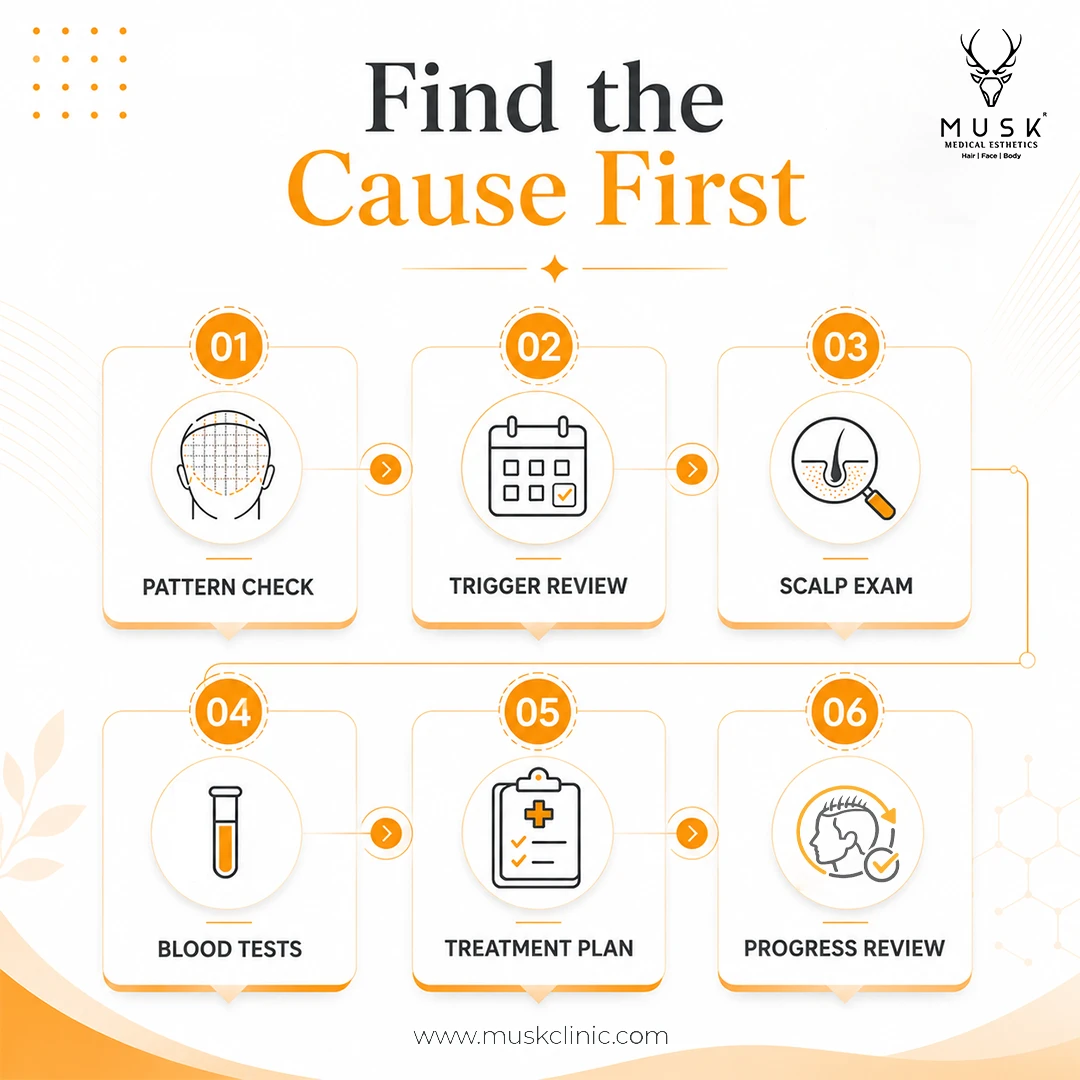
Effective treatment starts with finding the cause, according to the American Academy of Dermatology. That is why a dermatologist or hair restoration doctor looks at the scalp, hair pattern, shedding history, medical background, and sometimes blood tests before recommending treatment.
A person with stress-related telogen effluvium may need trigger control, nutrition, and time. A person with androgenetic alopecia may need long-term medical therapy. A person with a bald crown may need hair transplant planning if the donor area is strong enough.
The key point is simple: stop guessing early. The longer progressive hair loss continues without diagnosis, the fewer native follicles may remain to protect.
What are the most common causes of hair loss?
The most common causes of hair loss include genetics, hormonal changes, stress, illness, nutritional deficiency, thyroid imbalance, scalp inflammation, autoimmune disease, tight hairstyles, and medication effects. Some causes create temporary shedding, while others can slowly shrink follicles or permanently damage them.
The American Academy of Dermatology lists many possible hair loss causes, including age, alopecia areata, cancer treatment, childbirth, illness, hair care practices, hormonal imbalance, scalp psoriasis, medication, and hereditary hair loss. This is why one treatment plan cannot fit everyone.
Cause | How it may look | What usually helps |
Androgenetic alopecia | Gradual hairline recession, crown thinning, wider part, or patterned density loss | Early medical treatment, PRP in selected cases, LLLT, transplant planning when needed |
Telogen effluvium | Sudden diffuse shedding after stress, fever, surgery, crash diet, or illness | Trigger correction, nutrition review, scalp care, time, and monitoring |
Alopecia areata | Round patches, eyebrow loss, beard patches, or sudden localized loss | Dermatologist evaluation and anti-inflammatory treatment options |
Nutritional deficiency | Diffuse shedding, brittle hair, fatigue, or related symptoms | Blood tests, diet correction, and supplements only when deficiency is confirmed |
Scalp conditions | Dandruff, itching, redness, scaling, pain, or pustules | Diagnosis-led scalp treatment before growth therapy |
Traction alopecia | Thinning at hairline or temples from tight hairstyles | Reducing tension early; advanced cases may need procedural planning |
Medication or medical cause | Shedding after a new medicine, thyroid changes, hormonal shifts, or illness | Doctor review of the trigger and safe treatment alternatives |
Note: Hair loss patterns can overlap. A patient may have genetic thinning plus stress shedding or dandruff-related scalp inflammation.
Bottom Line: The cause decides the treatment. Do not choose a product before you know why hair is falling.
How can you prevent hair loss from getting worse?
You cannot prevent every type of hair loss, but you can reduce avoidable triggers and protect existing follicles. Prevention works best when it combines gentle hair care, nutrition, scalp health, stress control, and early medical review instead of relying on one shampoo or supplement.
Cleveland Clinic notes that prevention steps may include a healthy diet with enough calories, protein, and iron; stress management; treatment of thyroid or medical conditions; and avoiding tight hairstyles that pull the hair. These habits support hair health but do not replace medical treatment when progressive thinning is present.
Start with the basics. Avoid tight buns, harsh brushing, repeated heat styling, aggressive chemical treatments, and scratching an inflamed scalp. Wash based on scalp needs, not internet rules. A greasy or dandruff-prone scalp may need more consistent cleansing than a dry scalp.
Nutrition also matters. Very low-calorie diets, low protein intake, low iron stores, vitamin D deficiency, and rapid weight loss can all contribute to shedding in some people. Supplements should be guided by testing, because taking random high-dose vitamins rarely fixes hair loss and may create other problems.
Which hair loss treatments are actually dermatologist-backed?
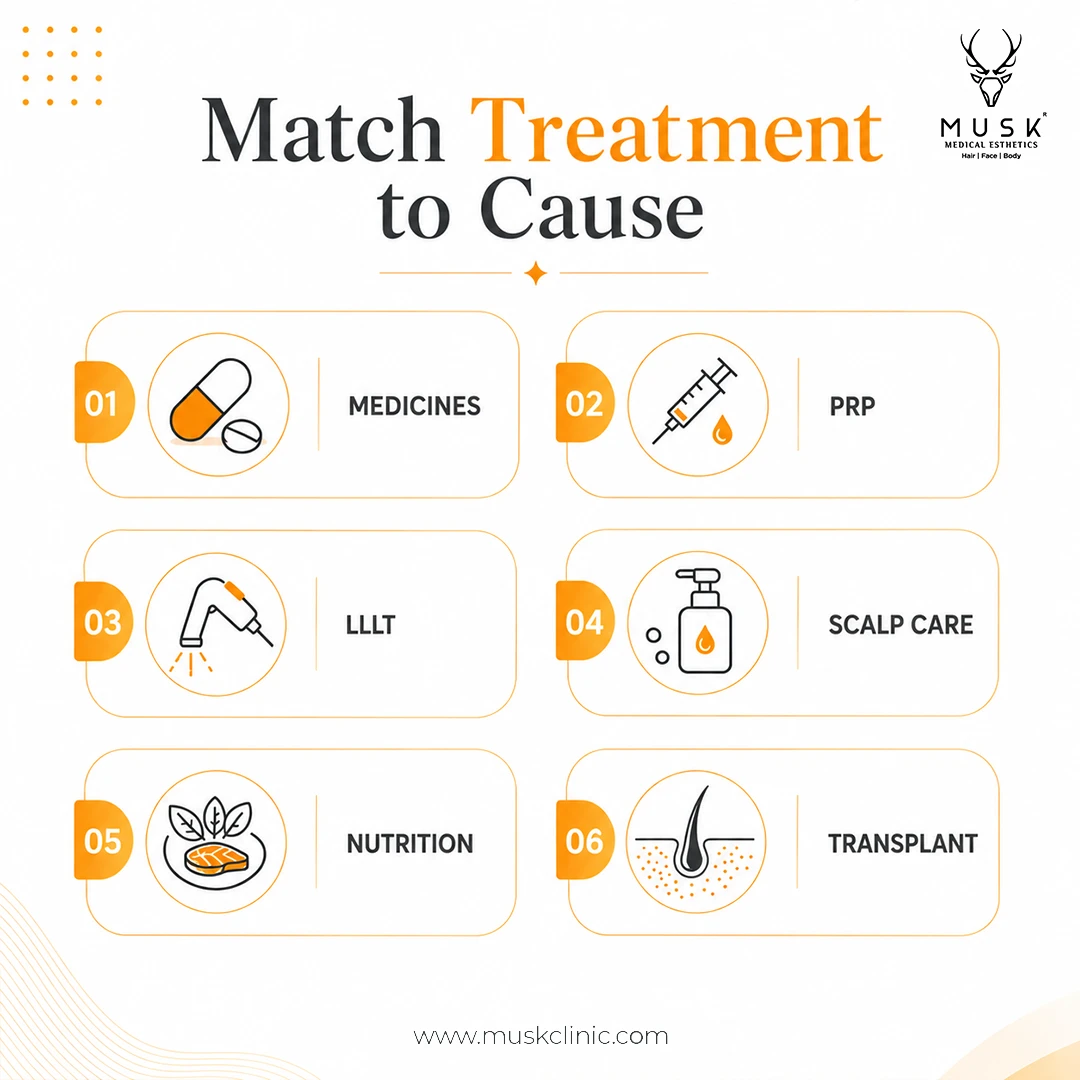
Dermatologist-backed hair loss treatments include diagnosis-led scalp care, minoxidil, prescription hormone-modulating medicines for suitable patients, PRP, LLLT, anti-inflammatory treatments, and hair transplant surgery when follicles are permanently lost. The best plan may use one treatment or a combination.
Mayo Clinic explains that minoxidil can help many people regrow hair or slow hair loss, but it usually takes at least six months to prevent further loss and start regrowth. Finasteride is a prescription option for men and may slow hair loss in suitable patients, but side effects and pregnancy precautions must be discussed with a doctor.
For early or moderate thinning, a doctor may discuss hair loss treatment options such as topical medicines, oral medicines, scalp care, PRP, LLLT, or a monitoring plan. For bald areas where follicles are no longer active, medical therapy may not create enough coverage by itself.
A 2024 systematic review on PRP for androgenetic alopecia found potential benefit, but also noted limitations in evidence quality and study variation. That makes PRP a useful option for selected patients, not a universal cure.
Treatment option | Best suited for | What to know before starting |
Topical minoxidil | Pattern thinning, early crown loss, wider part, or density loss | Needs consistent use for months; stopping may reduce benefits |
Prescription medicines | Selected male or female pattern hair loss cases after evaluation | Must be prescribed carefully based on age, sex, pregnancy plans, side effects, and history |
PRP therapy | Early to moderate thinning, weak hair quality, or support around transplant planning | Usually needs sessions and maintenance; results vary by patient |
LLLT | Mild to moderate thinning or supportive hair-strengthening plans | Consistency matters; best used after diagnosis, not as a random device purchase |
Scalp treatment | Dandruff, seborrheic dermatitis, itching, inflammation, or infection-linked shedding | Treating the scalp can reduce shedding triggers and improve comfort |
Hair transplant | Stable bald or sparse areas with adequate donor hair | Redistributes follicles; does not stop future loss of native hair |
Nutritional correction | Confirmed iron, vitamin D, protein, or other relevant deficiency | Supplements help only when the missing factor is real and corrected safely |
Note: Treatment choice depends on diagnosis, medical history, hair loss stage, scalp condition, and patient goals.
Bottom Line: The strongest hair loss plans are diagnosis-led, consistent, and realistic about what each treatment can and cannot do.
Is PRP enough to stop hair loss?
PRP may help selected patients with early to moderate hair thinning, but it is not enough for every case. It can support hair density, thickness, and scalp recovery in some patients, yet it cannot create new follicles in a completely bald area where transplantable coverage is needed.
During PRP treatment a patient’s blood is processed to concentrate platelets, then injected into targeted scalp areas. The goal is to expose follicles to growth factors that may support the hair growth environment.
PRP is often considered when the hair is thinning but not fully gone. It may also be discussed alongside medication or after transplant planning. The best candidates usually have active miniaturized follicles, realistic expectations, and a willingness to complete multiple sessions.
PRP is usually less useful when the scalp is fully bald, scarred, infected, or affected by untreated medical triggers. In those cases, diagnosis and sequencing matter more than rushing into injections.
When do medicines, LLLT, or hair transplant make more sense?
Medicines may make sense when follicles are still active. LLLT may be used as supportive therapy in suitable thinning cases. Hair transplant makes more sense when an area has permanent density loss and a healthy donor area can safely provide grafts.
Think of treatment as a ladder. The first step is diagnosis. The next step is protecting existing hair. Then your doctor decides whether regeneration support, medical therapy, or surgical restoration is needed.
For some patients, LLLT can be part of a broader plan for mild or moderate thinning. It should not be used as a substitute for diagnosis if the scalp is inflamed, shedding is sudden, or hair loss is patchy.
A hair transplant may be considered when the goal is to restore coverage in areas where follicles have already been lost. The donor area, hairline design, graft count, and future hair loss risk must be reviewed before surgery.
Many patients need combination planning. A transplant may improve the hairline, while medical care protects the crown and native hair. PRP or LLLT may support quality and recovery in selected cases.
What should you do at home before seeing a doctor?
Before seeing a doctor, track your shedding pattern, stop harsh hair practices, photograph your scalp in the same lighting, review recent health changes, and collect details about medicines, supplements, stress, diet, and family history. This makes consultation more useful.
Do not panic over one heavy hair wash. Instead, look for a pattern. Is shedding sudden or gradual? Is the hairline moving back? Is the part widening? Are there patches? Is there itching or scaling? Did it start after fever, childbirth, weight loss, surgery, or a new medicine?
Avoid starting multiple products at once. When too many oils, serums, supplements, and medicines are added together, it becomes hard to know what helped, what irritated the scalp, and what caused shedding or dermatitis.
Home step | Why it helps | What to avoid |
Take monthly scalp photos | Shows whether thinning is progressing or stable | Changing lighting and angles each time |
Reduce tight hairstyles | Protects hairline and temples from traction stress | Tight buns, heavy extensions, constant pulling |
Treat dandruff early | Scalp inflammation can worsen shedding and scratching | Ignoring itching, scaling, or redness |
Review diet and weight changes | Crash diets and low protein may trigger shedding | Random high-dose supplements without testing |
Check recent illness or stress | Telogen shedding often follows a trigger by weeks or months | Assuming every shed hair means baldness |
Bring medication history | Some medicines or hormonal changes can affect hair | Stopping prescribed medicines without medical advice |
Note: These steps are supportive. They are not a substitute for dermatologist evaluation when shedding is severe, sudden, patchy, painful, or progressive.
Bottom Line: Home care can reduce triggers, but diagnosis decides whether treatment should be medical, procedural, surgical, or watchful waiting.
When should you see a dermatologist for hair loss?
See a dermatologist or hair restoration doctor if hair loss is sudden, patchy, painful, itchy, scaly, rapidly progressive, associated with eyebrow or beard loss, or continuing for more than a few weeks without a clear reason. Early review can prevent delay in treatable cases.
You should also get checked if you have a family history of baldness and notice early recession, crown thinning, or a widening part. Pattern hair loss can look mild in the beginning, but early management may protect follicles before the thinning becomes obvious in photos.
Johns Hopkins Medicine explains that minoxidil and finasteride are among nonsurgical medicine options for hair loss, while hair replacement surgery is another pathway for selected patients. A doctor can help decide which category your case belongs to.
A consultation may include scalp examination, hair pull test, medical history, family history, dermoscopy, blood tests, or review of existing products. The aim is not to sell a treatment immediately. The aim is to avoid the wrong treatment.
Why choose Musk Clinic for hair loss treatment in Ahmedabad?
Musk Clinic approaches hair loss with diagnosis-led planning, medical treatment options, PRP, LLLT, and advanced hair restoration for suitable candidates. The goal is to match the treatment to the cause, not push every patient toward the same solution.
Dr. Anand B. Shah’s surgical and facial-aesthetic background supports hairline planning when transplant is needed, while the clinic’s broader hair restoration setup allows patients to discuss non-surgical and surgical options in one place.
The clinic highlights 8+ in-house doctors, 17+ international technology partners, and 17,000+ happy patients across hair, skin, face, body, cosmetic surgery, and aesthetic treatments. For hair loss patients, this helps create a treatment plan that can include scalp care, hair strengthening, PRP, ARTAS 9X, FUE, or transplant follow-up when appropriate.
Conclusion
The best way to stop hair loss is to stop guessing. Hair fall can happen because of genetics, stress, nutrition, scalp inflammation, hormonal changes, medical conditions, medication effects, or permanent follicle loss. Each cause needs a different plan.
Dermatologist-backed treatments can help when they are used for the right diagnosis. Minoxidil, prescription medicines, PRP, LLLT, scalp care, and hair transplant all have a role, but none of them is the best answer for every patient.
If you want to know how to stop hair loss in your case, start with a proper scalp and hair evaluation. That gives you a clearer path, better expectations, and a safer treatment plan.
Frequently Asked Questions (FAQs)

Dr. Anand B. Shah
- 10 Years of Experience
Dr Anand B. Shah, is a board-certified Maxillofacial & Craniofacial surgeon who is highly skilled in cosmetic facial and hair restoration surgery and has exclusively practised the same, internationally and nationally.