






 By Dr. Anand Shah
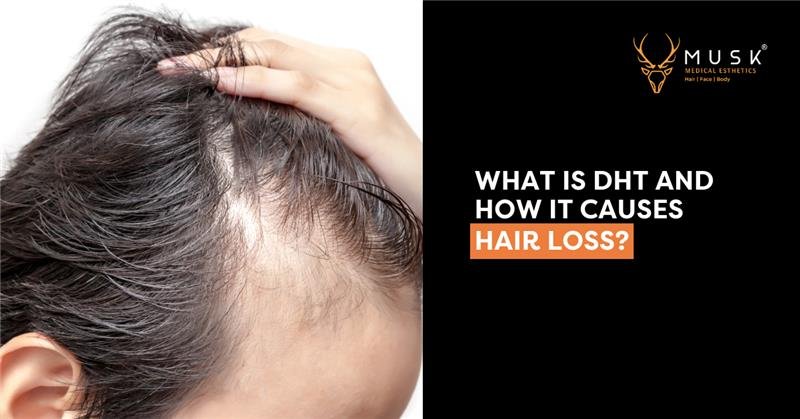
 If your hairline is slowly moving back, your crown looks thinner in photos, or your part line is widening, DHT may be one of the reasons. DHT hair loss is not ordinary shedding. It is usually a patterned, progressive form of thinning that can continue unless the cause is identified and managed early.
DHT stands for dihydrotestosterone. It is an androgen hormone made from testosterone, and in genetically sensitive hair follicles, it can contribute to androgenetic alopecia, also called male or female pattern hair loss. The good news is that DHT-related hair loss can often be slowed, stabilized, or improved with the right diagnosis and treatment plan.
This guide explains what DHT is, how it affects hair follicles, how DHT blocker options work, what women should know before using anti-androgen treatment, and when PRP, medication, or hair transplant planning may be appropriate.
Key Takeaways
- DHT Is Not Always Bad: DHT is a natural hormone with normal roles in the body, but genetically sensitive scalp follicles may react to it by shrinking over time.
- Pattern Matters: DHT hair loss usually causes a receding hairline, temple thinning, crown thinning, or widening part rather than random shedding across the scalp.
- Sensitivity Matters More Than Level: Some people lose hair with normal DHT levels because their follicles are more sensitive to DHT than others.
- Early Treatment Helps: Medication, minoxidil, PRP, LLLT, and other options tend to work better when follicles are still active and not fully miniaturized.
- Women Need Careful Evaluation: DHT blockers for women should not be chosen casually because pregnancy status, PCOS, hormones, and side effects must be considered.
- Natural Options Have Limits: Nutrition, stress control, and supplements may support hair health, but they usually cannot reverse established genetic hair loss alone.
- Hair Transplant Does Not Stop DHT: A transplant can restore density in selected areas, but native hair may still need ongoing medical support if DHT sensitivity continues.
What Is DHT Hair Loss?
DHT hair loss is pattern hair loss linked to the effect of dihydrotestosterone on genetically sensitive scalp follicles. DHT is created when the enzyme 5-alpha reductase converts testosterone into a stronger androgen. In people with androgen-sensitive follicles, this hormone may gradually shrink the follicles and produce finer, shorter hair.
This process is called miniaturization. A full, thick terminal hair slowly becomes thinner and weaker. Over time, the hair growth cycle shortens, the resting phase becomes more prominent, and the visible density of the scalp decreases.
DHT does not affect everyone in the same way. Some people have normal hormone levels but strong follicle sensitivity. Others may have higher androgen activity, but little visible scalp thinning. That is why a proper scalp and medical evaluation matter more than guessing symptoms alone.
How Does DHT Cause Hair Loss?
DHT can contribute to hair loss when it binds to androgen receptors in sensitive scalp follicles. The follicle responds by shrinking, producing thinner strands, and spending less time in the growth phase. This is why DHT-related thinning often develops slowly and follows a visible pattern.
- Testosterone is converted into DHT by the 5-alpha reductase enzyme.
- DHT binds to androgen receptors around sensitive scalp follicles.
- The follicle gradually miniaturizes and produces thinner, shorter hair.
- The hair growth phase becomes shorter, while shedding and resting phases may become more noticeable.
- If the process continues for years, some follicles may stop producing visible hair.
This is why DHT hair loss is different from a temporary shedding phase. It is usually progressive. Hair follicle miniaturization is the central feature of androgenetic alopecia, so early action is often more useful than waiting until large bald areas appear.
Is DHT Hair Loss Different From Normal Hair Fall?
Yes. Normal hair fall is usually part of the natural hair cycle, while DHT hair loss is a patterned miniaturization process. Many people shed hair daily, but DHT-related thinning changes the thickness, length, and density of growing hairs over time.
Bottom Line: DHT hair loss is usually about pattern and miniaturization, not just the number of hairs you see in the shower.
What Are the Signs of DHT Hair Loss in Men and Women?
DHT-related hair loss often looks different in men and women. Men commonly notice temple recession, a changing hairline, and crown thinning. Women more often notice a wider part, reduced ponytail thickness, and diffuse thinning across the top of the scalp.
Common Signs in Men
- Hairline slowly receding at the temples
- M-shaped hairline becoming more visible
- Thinning or circular density loss at the crown
- Hair on the top becoming finer than hair at the sides and back
- More scalp visibility in bright light or photos
Common Signs in Women
- Part line becoming wider over time
- Reduced hair volume across the top of the scalp
- Thinner ponytail or reduced styling fullness
- Crown visibility without a sharply receding hairline
- Hair shedding along with gradual density reduction
Women should also be evaluated for PCOS, thyroid imbalance, iron deficiency, vitamin D deficiency, postpartum shedding, perimenopause, and other non-DHT triggers that can overlap with pattern hair loss.
Why Do Some People Lose Hair from DHT And Others Do Not?
The difference is usually follicle sensitivity. DHT is present in the body naturally, but only some scalp follicles are genetically programmed to respond by shrinking. This is why two people can have similar hormone levels but very different hair density over time.
Family history is a major clue. If your father, mother, grandparents, or siblings have pattern hair loss, your follicles may be more likely to react to DHT. Age also matters because DHT-related miniaturization often becomes more visible after years of slow progression.
This also explains why a blood test alone may not answer everything. A person can have normal DHT levels and still have androgenetic alopecia. A scalp examination, pattern assessment, and medical history are often more useful than relying on hormone numbers alone.
What Can Increase the Impact of DHT On Hair Follicles?
DHT sensitivity is strongly genetic, but other factors can make hair thinning look worse or speed up shedding. These factors may not directly create DHT hair loss, but they can reduce scalp health, disturb the hair cycle, or expose an underlying pattern sooner.
Bottom Line: DHT may be the main driver, but successful treatment often depends on correcting the full hair loss picture, not one hormone alone.
Do DHT Blockers Work for Hair Loss?
DHT blockers can help selected patients with androgenetic alopecia, especially when treatment starts early. Prescription 5-alpha reductase inhibitors reduces the conversion of testosterone into DHT, while other treatments such as minoxidil support follicle activity through different pathways.
The right option depends on gender, age, pregnancy status, hair loss stage, medical history, side effect risk, and treatment goals. DHT blockers should not be started casually, especially by women or anyone with underlying medical concerns.
Bottom Line: DHT blockers are not one-size-fits-all. The safest plan starts with diagnosis, then matches treatment to the cause and stage of hair loss.
What Should Women Know About DHT Blockers?
DHT blockers for women need extra caution. Female hair loss can be caused by DHT sensitivity, PCOS, thyroid imbalance, low iron, postpartum changes, menopause, stress, medications, or inflammatory scalp conditions. Treating all female hair loss as DHT-related can delay the right care.
For women, options may include topical minoxidil, PRP therapy, nutritional correction, scalp treatment, or anti-androgen medicines such as spironolactone in selected cases. Finasteride and dutasteride are not routine first-line choices for women and are especially unsafe in pregnancy or when pregnancy is possible.
A woman searching for the best DHT blocker should first ask: is DHT actually the main cause of my hair loss? The answer usually requires scalp assessment, medical history, and sometimes blood work.
Can You Stop Genetic Hair Loss Naturally?
Natural care can support scalp and hair health, but it usually cannot fully stop established genetic hair loss by itself. If follicles are miniaturizing because of DHT sensitivity, lifestyle changes may help the overall environment but may not block the hormonal pathway strongly enough.
Helpful support habits may include:
- Eating enough protein and iron-rich foods
- Correcting vitamin D, B12, zinc, or ferritin deficiency if confirmed
- Managing dandruff, itching, or scalp inflammation
- Sleeping well and reducing chronic stress where possible
- Avoiding harsh chemical treatments, traction hairstyles, and aggressive brushing
- Avoiding self-medication with supplements marketed as DHT cures
Natural approaches may reduce breakage and improve hair quality, but persistent patterned thinning should be evaluated. Normal hair loss can include daily shedding, but density changes at the hairline, crown, or part line deserve a closer look.
When Is PRP Or Hair Booster Therapy Useful?
PRP may be useful as part of a wider treatment plan for early-to-moderate pattern hair loss. A 2024 systematic review found that PRP showed therapeutic potential for androgenetic alopecia, though study quality and patient response varied.
PRP does not directly block DHT. Instead, it uses platelet-rich plasma prepared from your own blood to support follicle activity and growth signaling. It may be considered with minoxidil, medicinal treatment, hair booster therapy, or post-transplant maintenance depending on the patient.
At Musk Clinic, PRP and other non-surgical options may be discussed after evaluating the hair loss pattern, donor area, scalp condition, and treatment goals. Patients can explore PRP treatment as one possible option within a personalized plan.
Is Hair Transplant the Only Long-Term Option for Advanced DHT Hair Loss?
For areas where follicles have become inactive and visible density is already lost, a hair transplant may be the most direct way to restore coverage. However, transplant surgery does not stop DHT from affecting the remaining native hair. Stabilization and maintenance planning still matter.
A hair transplant works by moving hair follicles from donor zones that are usually more resistant to DHT, commonly the back and sides of the scalp, into thinning areas. The transplanted hair can provide long-term growth, but surrounding native hair may continue to thin if DHT sensitivity is not managed.
For suitable patients, Musk Clinic offers advanced hair restoration options including ARTAS 9X robotic hair restoration, FUE planning, FUT options, PRP, and medicinal support. The right choice depends on hair loss stage, donor hair quality, scalp condition, expectations, and doctor evaluation.
How Does Musk Clinic Evaluate DHT Hair Loss?
A strong DHT hair loss plan starts with a diagnosis. The goal is not only to reduce shedding but to understand whether the hair loss is genetic, hormonal, nutritional, inflammatory, stress-related, or a combination of factors.
- Scalp and pattern assessment to check hairline, crown, part line, density, and miniaturization.
- Medical and family history review to understand genetics, medications, stress, illness, PCOS, thyroid issues, and lifestyle factors.
- Treatment suitability discussion to compare medicinal treatment, minoxidil, PRP, hair booster options, LLLT, or transplant planning.
- Expectation setting so the patient understands timelines, maintenance, possible side effects, and realistic outcomes.
- Follow-up planning to monitor shedding, density, scalp health, and treatment response over time.
Why Choose Musk Clinic for DHT Hair Loss?
Choosing a clinic for DHT hair loss is not only about choosing a treatment name. It is about understanding the cause, identifying the stage, setting realistic expectations, and building a plan that protects existing hair while restoring confidence where possible.
Musk Clinic brings hair loss assessment, medicinal treatment, PRP, hair booster therapies, and advanced hair transplant options under one hair restoration approach. This helps patients compare non-surgical and surgical choices with clearer guidance instead of trying random DHT blockers or supplements.
The focus is patient-specific planning. Some people need early stabilization. Some need medical treatment plus PRP. Some may be better suited for transplant planning. Some may need blood work or treatment for a non-DHT trigger before choosing any hair restoration procedure.
Conclusion
DHT hair loss is common, but it should not be treated casually. The most important step is understanding whether DHT sensitivity is truly driving your thinning and how advanced miniaturization has become. Once that is clear, treatment can be more focused and realistic.
DHT blockers, minoxidil, PRP, hair booster therapy, and hair transplant surgery all have roles in hair restoration, but the right combination depends on the patient. Early action can help preserve active follicles. Advanced thinning may need a more comprehensive plan.
If you are noticing a receding hairline, crown thinning, a wider part, or progressive density loss, a doctor-led consultation can help you identify the cause before you spend months trying the wrong solution.