






 By Pooja Sharma
 Aging is natural. Your skin is supposed to change over time.
But how your skin age depend a lot on how you care for it.
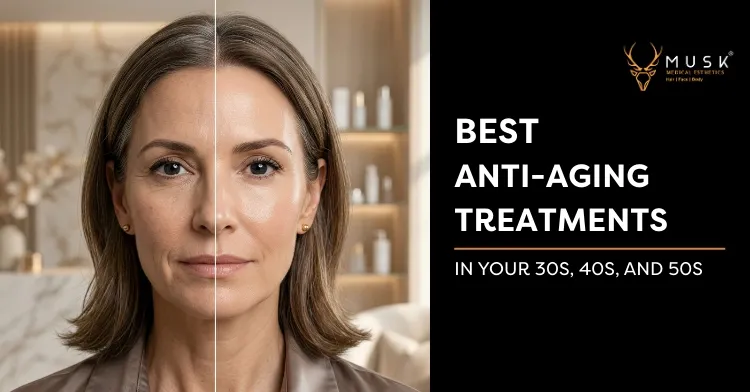
In your 20s, your skin feels firm and smooth. In your 30s, you may start noticing fine lines around your eyes. In your 40s, your skin may lose elasticity. In your 50s, you might see deeper wrinkles, dryness, and sagging.
These changes happen because collagen production slows down starting in your late 20s.
According to the American Academy of Dermatology, collagen naturally decreases as you age, which leads to thinner and less elastic skin.
Hormones also play a role. Sun exposure builds up over time. Lifestyle choices matter. Stress, sleep, nutrition, and skincare habits all influence how your skin looks.
The important thing to understand is this. Anti-aging treatments are not one size fits all.
The best treatments in your 30s focus on prevention. In your 40s, you focus on correction and collagen stimulation. In your 50s, you focus on restoration and tightening.
When you match your treatments to your decade, you get better results and avoid unnecessary procedures.
In this guide, you will learn exactly which treatments work best in your 30s, 40s, and 50s.
What Are the Best Anti-Aging Treatments by Age?
The best anti-aging treatments depend on your age and your skin’s needs.
In your 30s, focus on prevention and collagen stimulation. In your 40s, target fine lines, pigmentation, and early volume loss. In your 50s, prioritize restoration, skin tightening, and deeper rejuvenation using advanced treatments and customized skincare.
Your skin changes every decade. What works in your early 30s may not be enough in your late 40s. Aging is natural, but how you care for your skin can dramatically influence how it looks and feels over time.
In your 30s, collagen production starts to slow down. In your 40s, fine lines become more noticeable, and skin may lose firmness. In your 50s, hormonal changes can lead to thinning skin, dryness, and deeper wrinkles.
The key is not to chase trends. The goal is to choose treatments that match your skin’s biology at each stage of life.
How Skin Ages Over Time
Before you choose treatments, it helps to understand what is happening inside your skin.
Aging is not just about wrinkles. It is about structural changes beneath the surface. Your skin’s firmness, elasticity, hydration, and glow all depend on biological processes that shift over time.
Let’s break down the main reasons your skin changes as you age.
Collagen and Elastin Loss
Collagen is the protein that keeps your skin firm and plump. Elastin allows your skin to bounce back when stretched.
Starting in your late 20s, your body produces less collagen each year. This gradual decline leads to:
- Fine lines
- Loss of firmness
- Mild sagging
- Thinner skin
By your 40s and 50s, collagen loss becomes more noticeable. That is why collagen-stimulating treatments become more important as you age.
The American Academy of Dermatology explains how collagen changes impact visible aging.
Sun Damage and Environmental Stress
Sun exposure is one of the biggest contributors to premature aging.
Ultraviolet rays break down collagen and elastin fibers. Over time, this leads to:
- Wrinkles
- Sun spots
- Uneven skin tone
- Rough texture
Pollution and environmental toxins also create free radicals, which damage skin cells.
The American Cancer Society emphasizes the importance of daily sun protection to reduce long-term skin damage.
Daily sunscreen is one of the most powerful anti-aging tools you have.
Hormonal Changes
Hormones affect your skin more than you may realize.
In your 30s and 40s, estrogen levels gradually shift. By your 50s, especially during and after menopause, estrogen declines more significantly.
Lower estrogen levels can lead to:
- Drier skin
- Reduced collagen
- Thinning skin
- Loss of elasticity
This is why skin may feel less plump in your 50s compared to your 30s.
Hormonal changes require different treatment strategies that focus on hydration, restoration, and structural support.
Intrinsic vs Extrinsic Aging
There are two types of aging that affect your skin.
Intrinsic aging is natural aging driven by genetics and biology. You cannot stop it, but you can slow its visible effects.
Extrinsic aging is caused by outside factors such as sun exposure, smoking, diet, and stress.
The good news is that extrinsic aging is largely preventable.
When you combine preventative skincare with targeted treatments, you can slow down visible aging significantly.
Best Anti-Aging Treatments in Your 30s
Your 30s are all about prevention.
You may start noticing fine lines around your eyes, mild forehead lines, or uneven skin tone. Collagen production has begun to slow down, but your skin still has a strong regenerative ability.
This is the decade to protect what you have and stimulate collagen before deeper wrinkles develop.
Preventative Skincare Routine
Your daily skincare routine matters more than any single treatment.
In your 30s, you should focus on:
- Retinoids: These increase cell turnover and stimulate collagen production.
- Vitamin C: This antioxidant helps brighten skin and protect against free radical damage.
- Sunscreen: Daily broad-spectrum SPF is essential to prevent premature aging.
- Peptides: These support collagen production and improve skin firmness.
The American Academy of Dermatology strongly recommends daily sunscreen use to reduce visible aging.
Consistency is key. Skincare is the foundation of long-term anti-aging.
Preventative Botox
Preventative Botox is becoming popular in your 30s.
Botox works by relaxing specific facial muscles that cause expression lines. When used early, it can prevent fine lines from becoming deep wrinkles.
You do not need large amounts. Small, strategic treatments can soften movement while keeping your face natural.
When done by a qualified provider, preventative Botox can delay more noticeable wrinkles later.
Chemical Peels
Chemical peels help improve skin texture and tone.
In your 30s, superficial peels can:
- Brighten dull skin
- Reduce mild pigmentation
- Improve acne scars
- Stimulate collagen production
These treatments typically involve minimal downtime and can be done several times a year.
Microneedling
Microneedling is one of the best collagen-boosting treatments in your 30s.
It works by creating tiny controlled micro-injuries in the skin. This triggers your body’s natural healing response and increases collagen production.
Microneedling can improve:
- Fine lines
- Acne scars
- Skin texture
- Pore size
Since your skin still regenerates efficiently in your 30s, results are often very good.
Laser Skin Treatments
Laser treatments such as IPL can help address early pigmentation and sun damage.
IPL targets brown spots, redness, and uneven skin tone. Treating sun damage early prevents deeper discoloration later.
Laser technology continues to advance, offering safe and effective options when performed by trained professionals.
Lifestyle Habits That Slow Aging
Your habits matter just as much as in-office treatments.
Focus on:
- Balanced nutrition with antioxidants
- Quality sleep
- Hydration
- Stress management
- Limiting sun exposure
Smoking and excessive alcohol can accelerate collagen breakdown.
In your 30s, small daily habits create long-term results.
Best Anti-Aging Treatments in Your 40s
Your 40s are often when aging becomes more noticeable.
You may see deeper forehead lines, crow’s feet, mild sagging around the jawline, or loss of volume in your cheeks. Skin may also look less radiant due to slower cell turnover.
This is the decade where prevention continues, but correction becomes more important.
Injectable Treatments
In your 40s, injectables become more common and often more necessary.
Botox continues to relax expression lines and prevent deeper wrinkles from forming. At this stage, it may be used more regularly to maintain smoothness.
Dermal fillers help restore lost volume. As you age, fat pads in your face shrink and shift. Fillers can:
- Restore cheek volume
- Soften nasolabial folds
- Improve under-eye hollows
- Enhance jawline definition
When done conservatively, injectables can refresh your appearance without looking artificial.
Laser Resurfacing
Laser resurfacing becomes more powerful in your 40s.
Fractional laser treatments target deeper wrinkles, uneven texture, and sun damage. They stimulate collagen production while improving overall skin tone.
Laser resurfacing can help with:
- Fine lines
- Acne scars
- Pigmentation
- Rough texture
Downtime varies depending on the intensity of the treatment, but results can be significant.
Radiofrequency Skin Tightening
Radiofrequency treatments use heat energy to stimulate collagen remodeling beneath the skin.
These treatments can help tighten mild sagging along the jawline, cheeks, and neck.
Radiofrequency is popular because it is non-invasive and requires little downtime.
While results are gradual, consistent treatments can improve firmness over time.
PRP Therapy
Platelet-rich plasma, often called PRP, uses your own blood to stimulate skin rejuvenation.
After drawing a small amount of blood, the plasma rich in growth factors is separated and applied or injected into the skin.
PRP can improve:
- Skin texture
- Fine lines
- Elasticity
- Overall glow
It is often combined with microneedling for enhanced results.
Medical-Grade Skincare
In your 40s, over-the-counter skincare may no longer be enough.
Prescription-strength retinoids can improve collagen production and reduce wrinkles. Growth factor serums may support skin repair and regeneration.
Medical-grade skincare products are typically formulated with higher concentrations of active ingredients.
Consistency remains essential.Addressing Volume Loss
Volume loss becomes more noticeable in your 40s.
You may see flattening of the cheeks, hollowing under the eyes, and deeper smile lines.
Strategic filler placement can restore youthful contours without making your face look overfilled.
The goal is balance and subtle enhancement.
In your 40s, combination treatments often deliver the best results. A mix of injectables, collagen stimulation, and advanced skincare creates a layered anti-aging approach.
Best Anti-Aging Treatments in Your 50s
Your 50s bring more visible changes to your skin.
Collagen production has declined significantly. Skin may feel thinner and drier. You might notice deeper wrinkles, more pronounced sagging, and changes in facial contours. Hormonal shifts, especially during and after menopause, can accelerate these effects.
In this decade, the focus shifts from prevention and early correction to restoration and structural support.
Advanced Dermal Fillers
In your 50s, volume restoration becomes more comprehensive.
As fat pads shrink and shift, your face may lose definition in the cheeks, temples, and jawline.
Dermal fillers can:
- Restore cheek structure
- Enhance jawline contour
- Support mid-face volume
- Reduce deep smile lines
The goal is not to look different. The goal is to restore what time has gradually reduced.
When performed by an experienced provider, fillers can create a natural, refreshed appearance.
Combination Laser Therapy
In your 50s, deeper laser treatments may be appropriate.
Combination laser therapy can target:
- Deep wrinkles
- Sun damage
- Age spots
- Uneven texture
More advanced resurfacing treatments stimulate significant collagen remodeling. Results often improve over several months as new collagen forms.
Laser technology continues to evolve, and treatment plans should be customized based on your skin type and goals.
Hormone-Related Skin Support
Hormonal changes affect hydration and elasticity.
Lower estrogen levels can lead to thinner, drier skin. This makes hydration and barrier repair especially important.
In your 50s, your skincare routine should focus on:
- Rich moisturizers
- Barrier-repair ingredients
- Collagen-supporting products
- Gentle exfoliation
A dermatologist or medical aesthetic provider can help tailor treatments to hormonal skin changes.
Thread Lifts
Thread lifts offer a minimally invasive lifting option.
This procedure uses dissolvable threads placed under the skin to create subtle lifting and stimulate collagen production.
Thread lifts can improve:
- Jawline definition
- Mild sagging
- Mid-face support
Results are temporary but can be helpful for those who want lift without surgery.
Surgical vs Non-Surgical Options
In your 50s, some people begin considering surgical procedures such as a facelift.
Non-surgical treatments can improve skin quality and mild to moderate sagging. However, significant skin laxity may require surgical consultation for more dramatic correction.
The decision depends on your goals, health, and comfort level. A professional consultation can help you understand your options clearly.
Neck and Décolletage Treatments
The neck and chest often show aging earlier than the face.
Sun exposure and collagen loss can lead to:
- Horizontal neck lines
- Crepey skin
- Pigmentation
- Sagging
Laser treatments, radiofrequency, and targeted skincare can improve these areas.
Treating the face alone may create an imbalance. A comprehensive anti-aging plan considers the neck and chest as well.
In your 50s, layered treatments often produce the best outcomes. Combining volume restoration, skin tightening, and collagen stimulation creates a balanced and natural result.
Anti-Aging Treatment Timeline by Decade
Now that you understand what works in your 30s, 40s, and 50s, let’s simplify it into a clear plan.
Think of anti-aging as a long-term strategy. Each decade builds on the previous one. When you stay consistent, you often need fewer aggressive treatments later.
Here is how you can approach each stage.
Your 30s Plan
In your 30s, focus on prevention and collagen support.
Your plan should include:
- Daily sunscreen
- Vitamin C in the morning
- Retinoid at night
- Professional skincare guidance
- Light chemical peels a few times a year
- Microneedling for collagen stimulation
- Small, preventative Botox treatments if needed
The goal is simple. Protect your collagen and correct early signs before they deepen.
If you stay consistent in your 30s, your 40s often feel easier.
Your 40s Plan
In your 40s, combine prevention with correction.
Your plan may include:
- Regular Botox maintenance
- Strategic dermal fillers for volume loss
- Laser resurfacing for texture and pigmentation
- Radiofrequency treatments for tightening
- Medical-grade skincare products
- Collagen-stimulating procedures
This is often the decade where combination therapy works best. Instead of relying on one treatment, you layer treatments for better results.
The focus is on maintaining structure, improving skin quality, and restoring balance.
Your 50s Plan
In your 50s, restoration and tightening become priorities.
Your plan may include:
- Advanced dermal fillers
- Combination laser therapy
- Radiofrequency or skin tightening treatments
- Thread lifts if appropriate
- Hydration-focused skincare
- Comprehensive facial and neck treatments
You may also explore surgical consultations if you want more dramatic lifting.
The key is personalization. Your skin history, genetics, and lifestyle all influence what works best for you.
A long-term plan allows you to make gradual, thoughtful decisions rather than reactive ones.
How to Choose the Right Anti-Aging Treatment
With so many options available, it is easy to feel overwhelmed.
You might wonder if you should start Botox. Or try laser treatments. Or invest in stronger skincare. The truth is that the right treatment depends on your skin, your goals, and your comfort level.
Here is how you can make a smart decision.
Skin Type Considerations
Your skin type matters.
If you have sensitive skin, aggressive laser treatments may require caution. If you struggle with hyperpigmentation, certain treatments need to be selected carefully to avoid worsening discoloration.
Darker skin tones require experienced providers for laser procedures to reduce the risk of pigmentation changes.
A professional skin analysis helps determine what is safe and effective for you.
Budget Planning
Anti-aging is a long-term investment.
Some treatments, like skincare and Botox, require ongoing maintenance. Others, such as laser resurfacing, may be done less frequently but cost more upfront.
You do not need to do everything at once.
Start with foundational treatments that provide the most impact. Build gradually over time.
Planning financially helps you stay consistent without stress.
Downtime Tolerance
Some treatments require little to no downtime. Others involve redness, peeling, or recovery time.
If you have a busy schedule, non-invasive treatments may be better. If you are willing to plan for recovery, deeper resurfacing may deliver stronger results.
Always ask your provider about realistic downtime expectations.
Long-Term Strategy
The most important factor is your long-term plan.
Quick fixes rarely provide lasting results. Instead, think in terms of maintenance and gradual improvement.
Ask yourself:
- What do I want my skin to look like in five years?
- Am I focusing on prevention or correction?
- Do I want subtle refreshment or dramatic change?
When you think long term, your treatment decisions become clearer.
A personalized consultation is often the best first step. An experienced provider can evaluate your skin, discuss your goals, and create a customized plan.
Conclusion
Aging is not something you need to fight. It is something you can manage with the right strategy.
In your 30s, focus on prevention and collagen support. In your 40s, combine correction with structure and volume maintenance. In your 50s, prioritize restoration, tightening, and comprehensive skin rejuvenation.
The key is not doing everything at once. The key is choosing the right treatments at the right time.
Every face is different. Your skin history, lifestyle, genetics, and goals all matter. That is why personalized guidance makes such a difference.
At Musk Clinic, you receive customized anti-aging treatment plans designed specifically for your age, skin type, and long-term goals.
Whether you are considering preventative Botox in your 30s, collagen-stimulating treatments in your 40s, or advanced rejuvenation in your 50s, the team at Musk Clinic provides expert care with a focus on natural-looking results.
Frequently Asked Questions (FAQs)

Dr Pooja Sharma
- 5 Years of Experience