



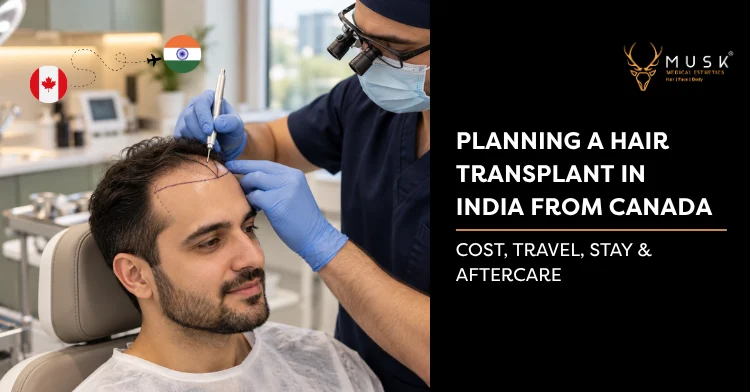
Planning a Hair Transplant in India from Canada: Cost, Travel, Stay & Aftercare
 By Dr. Anand Shah
Introduction
Planning a hair transplant in India from Canada involves more than comparing the surgery quote. A useful plan should also account for airfare, visa requirements, accommodation, time away from work, early recovery, follow-up after you return home, and what happens if you need unexpected medical care.
For Canadians in Toronto, Brampton, Vancouver, Calgary, Edmonton, Montreal and other cities, India may be worth comparing when procedure cost is important and international travel is practical. However, the right decision depends on your donor area, hair-loss pattern, treatment plan, health and comfort with remote follow-up.
Musk Clinic is located in Ahmedabad, Gujarat, India. It does not operate a hair transplant clinic in Canada. This guide explains how to plan the full Canada-to-India treatment journey before you commit to flights or surgery.
Key Takeaways
- Compare Total Cost: The procedure quote is only one part of the budget. Add airfare, visa, accommodation, local transport, meals, time away from work and possible unplanned care.
- Match the Treatment Plan: Compare similar graft needs, treatment areas, techniques and surgeon involvement before deciding that one country is cheaper.
- Plan Before You Fly: An online donor-area and hair-loss assessment can help estimate likely treatment needs before you book non-refundable travel.
- Build in Recovery Time: Do not plan the shortest possible stay simply because hair transplantation is usually an outpatient procedure.
- Check Coverage Carefully: Canadian government guidance warns that provincial plans and travel insurance may not cover expenses linked to planned treatment or complications abroad.
- Aftercare Must Cross Borders: Know how photographs, video reviews, medications, urgent questions and local medical care will be handled after you return to Canada.
- Quality Still Comes First: Surgeon involvement, donor preservation, hairline planning, facility standards and long-term strategy should carry more weight than a low headline price.
- Canada-Specific Evidence Helps: Musk Clinic publishes a Toronto patient case with 2,993 grafts using ARTAS robotic FUE, which can help prospective Canadian patients understand a documented treatment example without assuming the same outcome for everyone.
How Much Should a Canadian Patient Budget for a Hair Transplant in India?
There is no single Canada-to-India price because hair transplantation is individualized. Canadian clinic fees can range from several thousand dollars into five figures depending on graft count, technique and provider. India may have a lower procedure-level cost, but international patients need to calculate the complete trip before comparing value.
The most reliable comparison starts with two written treatment plans that address the same hair-loss areas and similar graft requirements. A 1,500-graft frontal procedure in Canada should not be compared with a 3,000-graft hairline-and-crown procedure in India simply because both are described as FUE.
| Cost Factor | Treatment in Canada | Treatment in India from Canada |
|---|---|---|
| Hair Transplant Procedure | Usually the largest direct expense | May have a lower procedure-level quote, depending on plan and technique |
| Flights | Usually unnecessary if treatment is local | Round-trip international airfare required |
| Visa | Not applicable for domestic treatment | Appropriate Indian visa or e-Visa must be confirmed |
| Accommodation | May be minimal for local treatment | Hotel or other stay required in Ahmedabad |
| Local Transport | Routine local travel | Airport transfers and local transport should be budgeted |
| Time Away from Work | Based mainly on treatment and recovery | Includes treatment, international travel and recovery buffer |
| Follow-Up | In-person review may be easier | Remote review should be planned before travel |
| Unexpected Care | Access to the treating clinic may be simpler | Local care in Canada or extended India stay can add expense |
Bottom Line: Compare the door-to-door cost of the same treatment plan, not just the procedure fee in two currencies.
What Changes the Hair Transplant Quote?
Price changes because the clinical plan changes. The number of grafts matters, but it is not the only factor. The recipient area, donor density, hair characteristics, technique, previous surgery and level of surgical complexity can all influence the final quote.
- Extent of hair loss and size of the recipient area
- Estimated graft requirement and donor-area capacity
- Hairline, temples, mid-scalp or crown involvement
- FUE, FUT or robotic-assisted FUE where appropriate
- Previous transplant scars or repair work
- Hair calibre, curl and donor density
- Whether one session or staged treatment is more realistic
- Surgeon involvement, facility standards and technology
- Medicines, post-procedure care and follow-up included in the quote
Musk Clinic explains that its pricing is based on the overall treatment plan rather than simply multiplying a per-graft fee. Patients can review the clinic’s hair transplant cost factors before requesting a personalized estimate.
Can a Cosmetic Hair Transplant Be Claimed as a Medical Expense in Canada?
For purely cosmetic hair transplantation, Canadian tax rules generally do not treat the procedure or related travel as an eligible medical expense. The Canada Revenue Agency lists cosmetic hair replacement procedures among expenses that cannot normally be claimed, while recognizing limited exceptions for medically necessary or reconstructive situations.
Before budgeting around a tax deduction, review the current Canada Revenue Agency medical expense guidance or speak with a qualified tax professional about your own circumstances.
Will Provincial Health Coverage or Travel Insurance Pay for Problems Abroad?
Do not assume that planned medical travel or treatment-related complications will be covered. Government of Canada guidance warns that provincial or territorial health plans may not cover expenses if complications occur in the country where treatment is performed, and many standard travel insurance policies exclude planned procedures.
Before paying a deposit, check the Government of Canada medical tourism guidance and ask your insurer in writing what is and is not covered, including complications, extra hotel nights, flight changes and emergency medical transport.
What Should You Send Before Booking Flights from Canada?
A remote assessment should establish whether international travel for surgery is reasonable before you purchase flights. Clear photographs and a complete health history cannot replace an in-person examination, but they can help the clinic estimate donor capacity, treatment areas, likely graft needs and technique.
- Front hairline photograph
- Left and right temple views
- Top and mid-scalp photograph
- Crown photograph
- Back and side donor-area photographs
- Age and pattern of hair loss
- Family history of hair loss
- Previous hair-loss treatments or transplant procedures
- Current medicines, allergies and relevant medical conditions
- Smoking history and general treatment goals
Musk Clinic’s medical tourism process includes pre-travel consultation and planning for international patients.
What Visa Should Canadian Patients Check Before Travelling to India?
Canadian citizens travelling specifically for medical treatment should verify the correct Indian visa category before booking the trip. India’s official e-Visa system includes an e-Medical Visa category, but eligibility, documentation and special conditions can change.
Use the official Government of India e-Visa portal for current Canadian eligibility and application requirements. The portal also carries a specific advisory for certain Canadian applicants with official, diplomatic, military, security or police backgrounds.
Do not rely on an old clinic blog or social-media post for visa rules. Confirm requirements close to your intended travel date and make sure your passport, supporting medical documents and travel details match the application.
How Long Should You Stay in Ahmedabad After a Hair Transplant?
The stay should be long enough for consultation, treatment, early healing and a postoperative review before long-distance travel. Musk Clinic currently notes that overseas patients are typically advised to plan around 3 to 4 days for pre- and post-operative care, but that should be treated as a planning starting point rather than a guaranteed travel-clearance date.
Your surgeon may recommend a different schedule depending on graft count, technique, swelling, donor healing, health conditions and how recovery is progressing. A flexible itinerary is usually safer than booking the shortest possible return window.
| Stage | What to Plan | Why It Matters |
|---|---|---|
| Before Arrival | Complete online assessment and confirm treatment plan | Reduces the risk of travelling without a realistic surgical plan |
| Arrival in Ahmedabad | Allow time for in-person examination before surgery | The final donor and scalp assessment happens face to face |
| Procedure Day | Keep the day free for treatment and immediate instructions | Session length depends on the individual plan |
| Early Recovery | Stay available for washing guidance, swelling review and donor checks | Early issues are easier to assess while you are still near the clinic |
| Before Return Flight | Ask the treating doctor to confirm travel readiness | Long-haul travel should follow recovery, not a fixed online timetable |
Can You Fly Back to Canada Soon After a Hair Transplant?
Return-flight timing should be decided with the treating doctor after the procedure, not from a generic online number. Hair transplantation is usually less invasive than many major operations, but Canada-bound travel is long haul and still requires practical planning around comfort, swelling, medicines and protection of the recipient area.
Government of Canada medical tourism guidance discusses the added risks of flying soon after surgery in general and recommends planning postoperative care before travel. The exact relevance of those risks depends on the procedure and the patient, so your treating doctor should confirm when you are fit to fly.
- Scalp swelling and comfort during a long journey
- Protecting newly transplanted grafts from rubbing or accidental contact
- Access to prescribed medicines during the flight
- Hydration and long periods of sitting
- Sleep position and head support
- Heavy luggage and physical exertion
- Ability to extend the stay if recovery is slower than expected
Which Hair Transplant Options Can Canadian Patients Consider in Ahmedabad?
Technique should be selected from the donor area, hair-loss pattern, goals and long-term plan rather than from a marketing label. Canadian patients travelling to Musk Clinic may be assessed for FUE, FUT or ARTAS 9X robotic-assisted FUE where appropriate.
FUE
Follicular Unit Extraction removes individual follicular units from the donor area and transfers them to the planned recipient areas. It avoids a long linear donor scar, although small extraction marks remain and donor management is still important.
FUT
Follicular Unit Transplantation removes a strip of donor scalp that is divided into follicular units. It may be considered in selected cases where the surgeon believes it better fits donor preservation, graft requirements or previous surgery.
ARTAS 9X Robotic-Assisted FUE
Robotic-assisted FUE uses technology to support follicular-unit identification and extraction. Musk Clinic offers ARTAS 9X in Ahmedabad. The robot can assist technical steps, but treatment planning, hairline design, donor strategy and clinical judgment still require physician oversight.
Canadian patients comparing technology can review how ARTAS 9X robotic FUE works before deciding whether it is appropriate for their case.
What Does Early Aftercare Usually Involve Before You Leave India?
Early aftercare focuses on protecting the transplanted follicles, allowing the donor area to heal and identifying any issue that needs review before you travel. Instructions vary by procedure, so the clinic’s written guidance should take priority over generic online advice.
- How and when to wash the scalp
- Sleeping position and head elevation
- Avoiding rubbing, scratching or pressure on grafts
- Medicines and topical products
- Exercise and heavy lifting restrictions
- Sun exposure and heat precautions
- When headwear is appropriate
- What redness, crusting or swelling may be expected
- Which symptoms should trigger an urgent medical review
How Should Aftercare Work After You Return to Canada?
International follow-up should be agreed before surgery. Routine progress can often be monitored with scheduled photographs or video reviews, but a remote plan must also explain what to do if you develop pain, infection, unusual swelling, bleeding or another concern that needs hands-on examination in Canada.
Before leaving Ahmedabad, keep copies of:
- Procedure summary and treatment date
- Graft count and treatment areas
- Technique used
- Medication list and doses
- Known allergies
- Postoperative instructions
- Clinic contact details and urgent-contact process
- Planned timing for photographs or video follow-up
The Government of Canada advises medical travellers to bring home copies of their medical records, plan continuity of care, and tell healthcare providers after returning that they received treatment abroad.
Does Musk Clinic Have a Documented Case from Canada?
Yes. Musk Clinic publishes a Toronto, Canada case involving a 27-year-old patient treated with 2,993 grafts using ARTAS robotic FUE for a Norwood stage 3 pattern, focused on the hairline, frontal tuft and temples.
You can review the documented Toronto ARTAS robotic FUE case for the stated graft count, technique and treatment areas. A published case can help you evaluate documentation quality, but it cannot predict another patient’s result.
When Might Treatment in Canada Be More Practical, and When Might India Be Worth Comparing?
Neither option is automatically better. Local treatment can be more practical when in-person follow-up and avoiding international travel are the main priorities. India may be worth comparing when cost, technology, surgeon fit and the ability to plan a structured medical trip make sense for you.
| Treatment in Canada May Suit You Better If | Treatment in India May Be Worth Comparing If |
|---|---|
| You strongly prefer local in-person follow-up | Procedure cost is an important decision factor |
| Long-haul travel is medically difficult or stressful | You are comfortable with international travel and remote follow-up |
| You cannot take additional travel days away from work | You can allow enough time in India for treatment and early recovery |
| You have complex health needs requiring local coordination | You have identified a suitable doctor, technique and treatment plan |
| The Canadian treatment quote fits your budget | You want to compare ARTAS 9X or other options available in Ahmedabad |
| You prefer not to manage visa, hotel and flight logistics | You already travel to India or have family support during the trip |
Bottom Line: The decision should combine clinical suitability, total cost, travel practicality and aftercare, not price alone.
What Questions Should You Ask Before Booking a Hair Transplant Trip from Canada?
Use the same standard of scrutiny you would use for surgery at home. Get the treatment plan, responsibilities, costs and follow-up process in writing before paying for flights or accommodation.
Treatment Plan
- Why am I considered a suitable candidate?
- How many grafts are estimated and which areas will be treated?
- How much donor reserve should remain for future hair loss?
- Why is FUE, FUT or robotic-assisted FUE being recommended?
Surgeon and Facility
- Who designs the hairline?
- Who performs extraction, recipient-site creation and implantation?
- What facility standards and emergency processes are in place?
- Can I see documented cases with similar hair loss and treatment areas?
Cost and Travel
- What does the quotation include and exclude?
- Could I reasonably need a second session?
- How many days should I plan to remain in Ahmedabad?
- What happens if my return flight needs to be changed?
Aftercare
- When should I send progress photographs?
- Are scheduled video reviews available?
- Who do I contact for urgent questions?
- What symptoms mean I should seek local medical care in Canada?
Why Might Canada-Based Patients Consider Musk Clinic in Ahmedabad?
For international patients, the useful question is not simply whether India is cheaper. It is whether the clinic can establish a realistic treatment plan before travel, explain technique and donor strategy, support the stay in Ahmedabad, and provide a clear follow-up process after the patient returns home.
- Ahmedabad-based hair restoration with pre-travel consultation for international patients
- FUE, FUT and ARTAS 9X robotic-assisted FUE options where clinically appropriate
- Treatment planning based on donor area, hair-loss pattern and long-term goals
- Medical tourism support that includes travel-planning guidance, accommodation and transport assistance
- Remote post-procedure support for patients returning overseas
- A documented Toronto patient result with stated technique, graft count and treatment areas
These factors can make the process easier to evaluate, but treatment suitability and expected outcomes still need to be assessed individually.
The Bottom Line
Planning a hair transplant in India from Canada should start with the treatment plan, not the flight search. Establish donor capacity, likely graft needs, technique, surgeon involvement and expected aftercare first. Then build the full budget around the procedure, including airfare, visa, accommodation, local travel, time away from work and a recovery buffer.
For Canadians considering Musk Clinic in Ahmedabad, a remote assessment can help determine whether the trip is reasonable before money is committed to travel. The goal is not to find the lowest number on a price page. It is to compare a clinically appropriate plan that you can safely complete and follow after you return to Canada.
Frequently Asked Questions (FAQs)
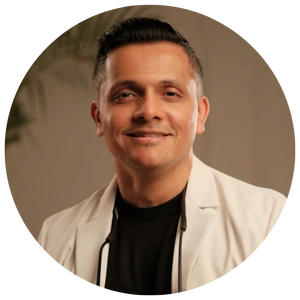
Dr. Anand B. Shah
- 10 Years of Experience
Dr Anand B. Shah, is a board-certified Maxillofacial & Craniofacial surgeon who is highly skilled in cosmetic facial and hair restoration surgery and has exclusively practised the same, internationally and nationally.