






 By Dr. Anand Shah
 If you are considering a hair transplant, you are probably focused on one main goal. You want strong, natural, long-lasting results.
Over the past decade, hair restoration has advanced significantly. Procedures like FUE and FUT have become more refined, more precise, and more natural looking. At the same time, another treatment has gained popularity in the hair loss world. PRP therapy.
You may have heard that PRP can boost hair growth. You may have seen clinics promote PRP alongside hair transplant procedures. Naturally, this raises an important question.
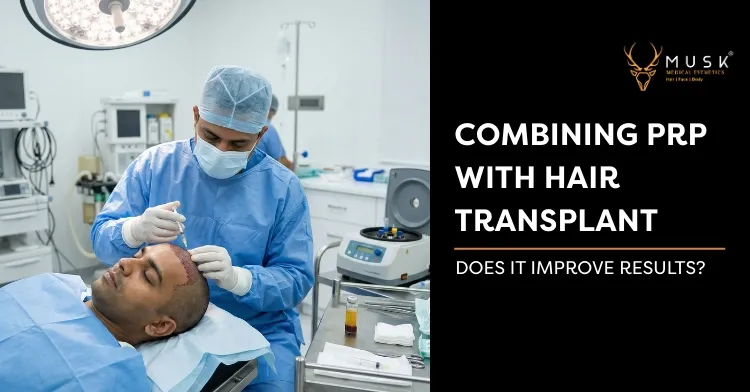
Does combining PRP with a hair transplant actually improve results?
Some patients believe PRP guarantees thicker hair. Others assume it is just a marketing add-on. The truth is more nuanced.
PRP, which stands for platelet-rich plasma, is a regenerative treatment that uses your own blood to concentrate growth factors. These growth factors may support healing and stimulate follicles.
Hair transplant surgery, on the other hand, physically relocates healthy hair follicles from a donor area to thinning or bald areas.
When combined properly, the idea is that PRP may help transplanted grafts survive, heal, and grow more effectively.
In this guide, you will get a clear and honest breakdown of how PRP works, how hair transplant surgery works, and what happens when the two are combined.
What Is PRP (Platelet-Rich Plasma)?
PRP stands for platelet-rich plasma.
It is a treatment that uses your own blood to concentrate healing components called platelets. Platelets contain growth factors that help repair tissue, stimulate cell activity, and support regeneration.
PRP has been used in sports medicine, orthopedics, and dermatology for years. More recently, it has gained attention in hair restoration.
The idea is simple. If growth factors can support healing and tissue repair, they may also help stimulate hair follicles and improve scalp health.
Let’s break down how it is prepared and how it works.
What Happens During a Hair Transplant?
Before you decide whether PRP adds value, you need to understand how a hair transplant works on its own.
A hair transplant is a surgical procedure that moves healthy hair follicles from a donor area, usually the back or sides of your scalp, to thinning or bald areas.
These transplanted follicles are genetically resistant to hair loss. Once they heal and begin growing, they typically continue to grow permanently.
There are two main techniques used today.
FUE Procedure Overview
FUE stands for Follicular Unit Extraction.
In this method, individual hair follicles are extracted one by one from the donor area using a specialized micro-punch tool.
Each graft is then carefully implanted into tiny recipient sites created in the thinning area.
FUE is popular because:
- It leaves minimal linear scarring
- Healing is generally faster
- It allows for precise placement
This technique is often chosen by patients who prefer shorter hairstyles.
FUT Procedure Overview
FUT stands for Follicular Unit Transplantation.
In this technique, a small strip of scalp is removed from the donor area. The strip is then dissected under a microscope to separate individual grafts.
The grafts are implanted into the thinning area in the same way as FUE.
FUT can allow for a large number of grafts in one session, but it leaves a linear scar in the donor area.
Both FUE and FUT can produce natural results when performed by experienced surgeons.
Why Combine PRP with a Hair Transplant?
Now that you understand how PRP works and how a hair transplant works, the next question is simple. >
Why combine them?
The idea behind combination therapy is not to replace the transplant. It is to support it.
A hair transplant physically moves follicles. PRP aims to create a healthier environment for those follicles to survive and grow.
Let’s look at the reasoning behind this approach.
The Theory Behind Combination Therapy
When hair follicles are transplanted, they go through stress.
They are removed from the donor area, stored briefly, and then implanted into tiny incisions in the recipient area. During this time, grafts rely on surrounding tissue to establish a new blood supply.
PRP contains concentrated growth factors. These growth factors may help stimulate tissue repair and improve blood flow.
The theory is that injecting PRP into the scalp may help transplanted follicles recover faster and integrate more effectively.
Improved Graft Survival Rate
One of the biggest concerns in any transplant is graft survival.
Not every graft will successfully grow. Surgical technique plays the most important role in survival, but supportive treatments may also contribute.
Some small studies suggest that PRP may improve graft survival rates by enhancing early vascularization, which means improving blood supply to the transplanted follicles.
Better blood supply in the early days may help grafts establish themselves more successfully.
Accelerated Healing
Hair transplant surgery creates thousands of tiny incisions in the scalp.
Healing speed matters. Faster healing may reduce inflammation, minimize scabbing, and improve overall comfort.
PRP has been used in other medical fields to support tissue repair.
Some patients report less redness and faster recovery when PRP is used during or shortly after surgery.
When Is PRP Used in the Transplant Process?
If you decide to combine PRP with your hair transplant, timing matters.
PRP can be used at different stages of the transplant journey. The goal is always the same. Support healing and optimize growth.
Let’s look at the most common timing strategies.
PRP During Surgery
Some clinics apply PRP during the transplant procedure itself.
In this approach, grafts may be soaked in PRP before implantation. The idea is that exposing follicles to growth factors before placement may enhance survival.
PRP may also be injected into the recipient area immediately after graft placement.
This approach focuses on supporting early graft integration and blood supply development.
PRP Immediately After Surgery
Another common approach is injecting PRP shortly after the transplant.
This may happen within days or weeks after surgery.
At this stage, the scalp is healing, and follicles are adjusting to their new location. PRP injections may support tissue repair and reduce inflammation.
Some patients report faster recovery and less redness when PRP is used during early healing.
PRP as a Maintenance Treatment Months Later
PRP is also used as a follow-up treatment months after the transplant.
At this point, transplanted follicles are beginning their growth cycle.
Maintenance PRP sessions may aim to:
- Support early growth
- Improve hair thickness
- Stimulate the surrounding native hair
Some patients choose a series of PRP sessions spaced a few months apart to maintain scalp health.
Benefits of Combining PRP with Hair Transplant
If you are considering adding PRP to your transplant plan, you want to know what practical benefits you might experience.
While results vary from person to person, several potential advantages are commonly discussed.
Faster Healing
After a hair transplant, your scalp needs time to recover.
Small scabs form around each graft. Mild swelling and redness are normal in the early days.
Because PRP contains growth factors that support tissue repair, it may help your scalp recover more efficiently.
Some patients report that redness fades sooner and the healing process feels smoother when PRP is used during or shortly after surgery.
Reduced Inflammation
Inflammation is a natural part of healing.
However, excessive inflammation can potentially affect graft comfort and early recovery.
PRP may help regulate the healing response by promoting balanced tissue repair.
Reduced inflammation can make the early recovery period more comfortable and may improve the overall healing environment for grafts.
Improved Graft Retention
One of the most discussed benefits of PRP is its potential to improve graft survival.
When follicles are transplanted, they need to establish a new blood supply quickly.
PRP may enhance early vascular support, which could help grafts anchor and thrive.
It is important to remember that surgical precision still plays the biggest role in graft survival. PRP may serve as an additional layer of support.
Stronger Early Growth
Some patients notice that new growth appears slightly stronger or thicker in the early months when PRP is used.
This may be due to stimulation of both transplanted follicles and nearby native hair.
Again, results vary. PRP may help optimize the growth phase, but it does not dramatically change the final density beyond what your donor supply allows.
Ideal Candidates for PRP + Hair Transplant
Not every patient needs PRP with a hair transplant.
While it can be beneficial for some people, the decision should be based on your hair loss stage, scalp health, and overall goals.
Here are the types of patients who may benefit most from combination therapy.
Early to Moderate Hair Loss
If you are in the early to moderate stages of hair loss, PRP may offer additional support.
In these stages, you often still have native hair surrounding the transplanted area. PRP may help stimulate those existing follicles and slow further thinning.
This can improve overall density and create a more blended, natural look.
For patients with very advanced baldness and minimal native hair, PRP may have less impact outside the transplanted grafts.
Patients Seeking Maximum Density
If your goal is to optimize every possible advantage for thicker-looking results, adding PRP may be worth considering.
PRP may enhance early growth quality and support follicle health.
While it does not increase the number of grafts you receive, it may help you maximize the performance of each graft.
If you are detail-oriented and want to pursue every supportive option, combination therapy may align with your goals.
Patients Wanting Faster Recovery
Some patients are particularly concerned about downtime.
If you want to return to work or social activities as soon as possible, supporting healing may be a priority.
PRP may help reduce inflammation and encourage faster tissue repair in the early recovery phase.
It is important to have a thorough consultation with your surgeon to determine whether PRP is appropriate for your specific situation.
What to Expect If You Choose Combination Treatment
If you decide to combine PRP with your hair transplant, knowing what to expect can help you feel prepared and confident.
The process is generally straightforward and designed to complement your surgical procedure.
Treatment Timeline
If PRP is used during surgery, the process usually begins with a simple blood draw before or during your transplant procedure.
Your blood is processed while your transplant is underway. The prepared PRP may be applied to grafts or injected into the scalp before the procedure is completed.
If PRP is scheduled after surgery, your first session may take place within the first few weeks or months following your transplant.
Some patients choose a series of PRP sessions spaced a few months apart to support ongoing follicle stimulation.
Your surgeon will recommend a schedule based on your hair loss pattern and goals.
Recovery Process
PRP injections are minimally invasive.
If performed during your transplant, you will likely not notice a significant difference in recovery compared to transplant alone.
If PRP is performed separately, you may experience mild soreness or tenderness at the injection sites for a day or two.
There is typically no significant downtime associated with PRP sessions.
You can usually resume normal activities quickly, following your clinic’s specific post-treatment instructions.
Follow-Up Sessions
Some patients benefit from maintenance PRP sessions.
These sessions are often spaced three to six months apart, depending on your treatment plan.
Follow-up sessions may help:
- Support long-term follicle health
- Stimulate the surrounding native hair
- Maintain scalp circulation
Your surgeon will evaluate your growth progress and adjust recommendations as needed.
Conclusion
If you are investing in a hair transplant, it is natural to want the best possible outcome.
Combining PRP with your hair transplant may offer supportive benefits such as faster healing, reduced inflammation, and potentially stronger early growth. For some patients, this added support provides extra peace of mind during recovery.
However, it is important to remember that PRP is not a substitute for surgical expertise. The skill of your surgeon, the quality of graft handling, and proper placement techniques will always be the most important factors in your final result.
PRP should be viewed as an enhancement, not a requirement.
The right choice depends on your level of hair loss, your expectations, your recovery goals, and your overall treatment plan.
This is where personalized guidance matters.
At Musk Clinic, every hair restoration journey begins with a detailed consultation. Our specialists evaluate your scalp condition, donor area quality, hair loss progression, and long-term goals before recommending any combination treatment.
We use advanced PRP preparation techniques alongside precision FUE procedures to create natural, balanced, and long-lasting results. Our focus is always on individualized care and realistic expectations.
If you are considering a hair transplant and want to know whether adding PRP can enhance your outcome, the expert team at Musk Clinic is here to guide you.
Frequently Asked Questions (FAQs)

Dr. Anand B. Shah
- 10 Years of Experience
Dr Anand B. Shah, is a board-certified Maxillofacial & Craniofacial surgeon who is highly skilled in cosmetic facial and hair restoration surgery and has exclusively practised the same, internationally and nationally.