






 By Pooja Sharma
 Every morning, the same moment. You glance in the mirror, and the eyes looking back at you seem heavier than yesterday - and the day before that. The lids feel lower. The under-eye area looks puffier. You have slept. You feel rested. But your face is telling a different story.
For many people across India, this is not just a fleeting bad morning. The excess skin folding over the upper lids, the persistent bags below - these are structural changes. They are driven by genetics, the slow thinning of skin over time, and the quiet redistribution of fat around the eye area. No eye cream fixes a structural problem. No concealer addresses excess skin. And no amount of sleep restores what anatomy has genuinely shifted.
Blepharoplasty - commonly called eyelid surgery or an eyelid lift - is one of the most precise, effective cosmetic procedures available for exactly this. It removes excess skin, repositions displaced fat, and restores a rested and refreshed look to the eye area. It is gaining significant momentum in India: The Times of India identified blepharoplasty as the hottest anti-aging beauty trend of 2026, with rising interest from patients in their twenties, thirties, and beyond.
This guide covers everything: what blepharoplasty involves, who it is right for, how the procedure works step by step, what recovery looks like week by week, and what results you can realistically expect. By the end, you will know exactly what questions to ask - and what to look for in a surgeon.
At Musk Clinic in Ahmedabad, Dr. Anand Shah brings board-certified maxillofacial and craniofacial surgical expertise - with extensive international training - to every cosmetic procedure. If eyelid surgery has been on your mind, this guide gives you the complete, honest picture.
Key Takeaways
- What it is: Blepharoplasty is a surgical procedure that removes excess skin, fat, and muscle from the upper or lower eyelids to create a more refreshed and youthful appearance.
- Who needs it: Ideal candidates have droopy upper eyelids, under-eye bags, hereditary puffiness, or excess skin that impairs their vision or makes them look older than they feel.
- Types available: Upper blepharoplasty, lower blepharoplasty, combined upper and lower, functional blepharoplasty (vision-improving), transconjunctival blepharoplasty (no visible external scars), and double eyelid surgery.
- How long it takes: The procedure typically takes 1 to 2 hours under local anesthesia with sedation. It is almost always a daycare surgery - no overnight stay required.
- Recovery: Most patients return to desk-based work within 7 to 10 days. Swelling and bruising fade significantly by the end of week two. Final results are visible at 6 to 8 weeks.
- How long results last: Research in the Aesthetic Surgery Journal shows blepharoplasty outcomes remain stable at 6 to 12 months, with many patients enjoying results for a decade or longer.
- Safety profile: Blepharoplasty is among the safest cosmetic procedures when performed by a board-certified surgeon in a sterile, properly equipped environment.
- What it cannot fix: Blepharoplasty addresses structural eyelid changes - not crow's feet, deep under-eye hollows, skin discoloration, or sagging brows. Those may require complementary procedures.
What Is Blepharoplasty - and Why Are So Many Indians Choosing It?
Blepharoplasty is a surgical procedure focused on the eyelids. It corrects structural changes - excess skin, displaced fat, loosened muscle - that create a tired, heavy, or aged appearance around the eyes. The procedure can target the upper eyelids, the lower eyelids, or both, depending on what needs to be addressed.
It is not a new procedure. But interest in it has surged noticeably in India in 2026. High-definition cameras on smartphones, daily video calls, and social media platforms that emphasize close-up eye content have made people far more aware of how the eye area looks on screen. The persistent bags that might once have gone unnoticed are now visible in every meeting and every photograph. The Times of India notes that the 2026 surge in blepharoplasty interest is being driven by younger patients in their twenties and thirties - not just older patients correcting age-related changes.
India also ranks among the most active countries for aesthetic procedures globally. World-class surgical expertise is increasingly available at home, and patients no longer need to travel abroad for results that meet international standards. When the procedure is performed by a surgeon with the right training and equipment, eyelid surgery in India delivers outcomes consistent with the best available anywhere.
Am I a Good Candidate for Eyelid Surgery?
Physical Signs You May Benefit from Blepharoplasty
You may be a good candidate if you experience one or more of the following:
- Excess skin on the upper eyelids that folds over your lashes or interferes with your vision
- Puffiness or bags under the eyes that persist regardless of how much sleep you get
- Upper eyelid drooping that makes you look permanently tired or older than you feel
- Hereditary conditions causing heavy upper lids or prominent under-eye fat pads
- Lower eyelid skin laxity with visible fine creases or loose tissue
- Asymmetry between the two eyes related to eyelid structure
Health and Age Considerations
Most blepharoplasty candidates are over 35, though younger patients pursue the procedure for hereditary puffiness, eyelid asymmetry, or early-stage preventative aesthetics. There is no single correct age - the relevant question is whether the structural concern is real, visible, and affecting your daily life or confidence.
Ideal candidates are in good overall health, do not smoke, have no active eye conditions such as dry eye syndrome or glaucoma, and hold realistic expectations about outcomes. A thorough pre-surgical evaluation - including a tear production test and visual field assessment - is standard practice before any eyelid procedure.
Types of Blepharoplasties - Which One Is Right for You?
Blepharoplasty is not a single procedure. It is a family of surgical techniques; each designed for a specific concern and eyelid type. Understanding the differences helps you enter a consultation with clearer expectations.
| Type | Target Area | Key Benefit | Duration |
|---|---|---|---|
| Upper Blepharoplasty | Upper eyelids | Removes excess skin and fat; lifts heavy, drooping lids | 45–60 mins |
| Lower Blepharoplasty | Lower eyelids | Reduces under-eye bags and puffiness; tightens lower lid skin | 45–60 mins |
| Combined (Upper + Lower) | Both eyelids | Full periorbital rejuvenation in a single procedure | 90–120 mins |
| Transconjunctival | Lower eyelid | No external incision; fat repositioned from inside – zero visible scarring | 30–45 mins |
| Functional Blepharoplasty | Upper eyelids | Improves peripheral vision obstructed by drooping upper lid skin | 45–60 mins |
| Double Eyelid Surgery | Upper eyelid | Creates or enhances eyelid crease for a more defined, open eye appearance | 45–90 mins |
Note: Duration is approximate. The final procedure type and duration are determined during your surgical evaluation based on your individual anatomy and goals.
Upper Blepharoplasty
This is the most commonly performed type in India. The surgeon makes a precise incision within the natural upper eyelid crease - exactly where it hides when the eye is open. Excess skin and, where needed, small pockets of fat are removed. Fine sutures close the incision. Scarring becomes effectively invisible within the crease as healing progresses.
Lower Blepharoplasty
Lower eyelid surgery targets the persistent bags and puffiness below the eye. There are two main approaches: an incision placed just below the lower lash line (external approach), or an incision made through the inner surface of the lower eyelid (transconjunctival approach), which leaves no visible external scar. The choice depends on how much skin laxity needs to be addressed.
Functional Blepharoplasty
When excess upper eyelid skin droops far enough to block peripheral vision, blepharoplasty becomes medically indicated - not merely cosmetic. A visual field test during the pre-surgical evaluation confirms whether functional surgery is warranted. Your surgeon will assess this as a standard part of the consultation process.
How Is Blepharoplasty Performed? A Step-by-Step Guide
For most patients, the process from consultation to final result follows a predictable and well-established sequence. Here is what it looks like:
Step 1 - Consultation and Evaluation: Your surgeon examines both eyelids carefully, assessing skin quality, fat distribution, muscle tone, eyelid symmetry, and brow position. A visual field test and tear production assessment are conducted. Photographs are taken from multiple angles. A personalized surgical plan is then developed around your specific anatomy and goals.
Step 2 - Pre-Procedure Preparation: Patients are asked to stop blood-thinning medications and supplements - including aspirin, ibuprofen, fish oil, and vitamin E - at least two weeks before surgery. Smokers are advised to stop at least four weeks before. On the morning of surgery, no makeup is worn around the eye area.
Step 3 - Anesthesia: Blepharoplasty is typically performed under local anesthesia with mild IV sedation. General anesthesia is rarely required. The area around the eyelids is numbed thoroughly. Most patients report little to no discomfort during the procedure itself, describing it as pressure rather than pain.
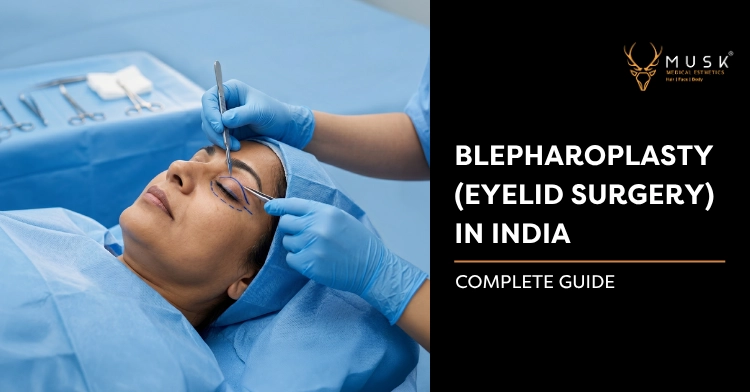
Step 4 - Surgery: Precise incisions are placed within the natural eyelid crease (upper lid) or just below the lash line or inside the lower lid (lower lid). Excess skin is measured and removed. Fat is repositioned or, in some cases, gently reduced. Fine sutures close the incisions. The entire procedure typically takes 1 to 2 hours, depending on whether one or both eyelids are being treated.
Step 5 - Recovery and Discharge: Blepharoplasty is almost always a daycare procedure. Patients go home the same day, typically with a responsible adult to accompany them. Eyes may feel tight, slightly sore, and sensitive to light immediately after surgery. This is expected and resolves quickly.
Blepharoplasty Recovery - What to Expect Week by Week
Most patients are genuinely surprised by how manageable blepharoplasty recovery is. It is not comfortable, but it is predictable. If you follow the post-operative protocol, the timeline below is what most people experience.
| Stage | Timeline | What Is Happening |
|---|---|---|
| Initial healing | Days 1–3 | Swelling and bruising are at their peak. Cold compresses and head elevation help. Prescribed eye drops and ointment are applied as directed. |
| Suture removal | Days 5–7 | Most sutures are removed. Bruising begins fading from dark purple toward yellow-green. Eyes feel less tight. |
| Social recovery | Days 7–14 | Most desk-based workers return to professional life at this point. Light makeup is typically permitted once sutures are removed and incisions are fully closed. |
| Light activity | Weeks 3–4 | Low-impact exercise can resume. Swelling continues to reduce steadily. Sunglasses are strongly recommended outdoors. |
| Full results | 6–8 weeks | Final transformation is clearly visible. Scarring has softened and lightened. The refreshed, rested eye appearance is now fully apparent. |
Recovery timelines are approximate and vary by individual. Strenuous exercise, direct sun exposure, and swimming should be avoided until your surgeon confirms it is safe to resume.
A few things accelerate healing reliably: keeping your head elevated even while sleeping for the first week, avoiding any pressure on the eye area, wearing good-quality UV-protective sunglasses outdoors, and following your surgeon's post-operative instructions precisely. The patients who follow the protocol consistently tend to heal faster and see better results.
How Long Do Blepharoplasty Results Last?
This is the question most patients ask first - and it deserves a direct answer. Research published in the Aesthetic Surgery Journal shows that blepharoplasty outcomes remain stable at 6 to 12 months post-procedure, with many patients enjoying results for ten years or longer. Upper eyelid results typically last 5 to 7 years before any further skin accumulation becomes significant. Lower eyelid results - particularly when fat has been repositioned rather than simply removed - tend to be more enduring.
Longevity depends on genetics, skin quality and elasticity, sun exposure habits, and the discipline of post-operative skin care. Patients who protect the eye area from UV exposure and maintain a consistent skincare routine consistently extend their results.
What blepharoplasty does not stop is the aging process itself. Skin will continue to age over time. But the structural reset it provides - removing accumulated excess skin and repositioning displaced fat - gives the eye area a fresh, healthy baseline to age from. That reset is genuinely meaningful.
Is Blepharoplasty Safe? Understanding the Risks
Blepharoplasty is widely considered one of the safest cosmetic surgical procedures when performed by a board-certified surgeon in a sterile, medically equipped environment. Like any surgical intervention, it carries risks - and understanding them honestly is part of making a good decision.
A 2026 systematic review published in the Indian Journal of Ophthalmology and Oculoplastics found that upper eyelid blepharoplasty delivers substantial functional and aesthetic benefits with a low complication rate. Fat-preserving and septal-tightening techniques were associated with particularly favorable patient-reported outcomes.
Expected Side Effects (Temporary)
- Swelling and bruising - resolves within 2 weeks for most patients
- Tightness or mild dryness around the eye area during the first week
- Mild sensitivity to light for the first 3 to 5 days
Rare Complications (Minimized by Skilled Technique)
- Temporary dry eye or excessive tearing - usually resolves within weeks
- Minor asymmetry requiring a small revision - rare when initial planning is thorough
- Infection or delayed healing - uncommon in sterile clinical settings with proper aftercare
- Fine scarring - minimized significantly by surgical technique and suture choice
The most important safeguard against complications is surgeon selection. A surgeon with specific training in periorbital anatomy - who understands how the eyelid functions, how it interacts with the eye, and where the critical structures sit - brings precision to eyelid surgery that directly reduces risk.
Blepharoplasty vs. Non-Surgical Eye Rejuvenation: An Honest Comparison
Many patients explore non-surgical options before committing to eyelid surgery. This is a sensible approach. The table below shows clearly what each option can and cannot deliver - so you invest in treatments that are genuinely suited to your concern.
| Option | Best For | Does NOT Fix | How Long It Lasts | Combine With Surgery? |
|---|---|---|---|---|
| Blepharoplasty | Excess skin, fat pads, drooping lids, under-eye bags | Crow’s feet, hollow eyes, pigmentation, brow sagging | 5-10+ years | Yes - pairs well with Botox, fillers, laser |
| Botox | Crow’s feet, subtle brow lift | Excess skin, fat pads, structural drooping | 3-4 months | Yes - complements surgical results |
| Tear Trough Fillers | Mild under-eye hollows, light shadowing | True fat herniation, skin laxity, significant bags | 9-18 months | Yes - enhances lower lid result |
| Laser Resurfacing | Skin texture, fine lines, surface pigmentation | Structural excess skin, fat, muscle laxity | 1-3 years | Yes - refines surface after surgery |
| Eye Creams | Mild hydration, very early fine lines | Structural skin excess, puffiness, drooping | Ongoing maintenance only | Yes - for routine skin care post-surgery |
Note: Non-surgical options work well for mild, early-stage changes. Once excess skin is significant or fat pads have shifted, surgery is the only reliable long-term solution. Our specialist team can advise the right combination for your concern.
At Musk Clinic, our comprehensive cosmetic surgery and aesthetics portfolio means our specialist team can design a combined plan - addressing both structural and surface concerns - in a single, coordinated approach.
Why Choose Musk Clinic for Blepharoplasty in Ahmedabad?
The outcome of eyelid surgery depends almost entirely on the surgeon's skill, judgment, and understanding of periorbital anatomy. The eyelid is one of the most delicate areas of the face. A difference of even a millimeter in incision placement, in how much skin is removed, or in how fat is repositioned can determine whether the result looks natural and refreshed - or operated.
Dr. Anand Shah brings board-certified maxillofacial and craniofacial surgical expertise to every cosmetic procedure at Musk Clinic. His international training - including preceptorships under globally recognized pioneers across the United States, Georgia, Belgium, and India - gives him a depth of anatomical understanding that informs every surgical decision around the face, including the delicate periorbital area. This is not a surgeon who performs eyelid surgery occasionally. It is a surgeon who has committed to mastering the full spectrum of facial aesthetic procedures.
The clinic has served 17,000+ happy patients, holds 1,000+ Google Reviews, and carries a 4.9/5 rating on Justdial. That track record reflects consistent clinical outcomes - and a patient experience built on transparency, safety, and genuine care for how each person leaves the clinic.
Every blepharoplasty consultation at Musk Clinic includes a thorough assessment of your eyelid anatomy, a clear explanation of what surgery will and will not achieve for you specifically, and a surgical plan built around your goals - not a template applied to every patient who walks in.
Conclusion
Tired eyes are not something you have to accept as permanent. If the skin over your upper lids has grown heavier, or the bags under your eyes have become a fixture that no amount of rest seems to shift, blepharoplasty offers a direct, long-lasting structural solution. It is precise, it is predictable, and in the hands of the right surgeon, the results look entirely natural.
The key is getting the right assessment first. Not every heavy eyelid needs surgery. Not every under-eye bag will benefit from the same technique. A thorough consultation - one that looks at your specific anatomy, your goals, and your medical history - is what determines whether blepharoplasty is genuinely right for you, and if so, exactly which approach delivers the best result.
At Musk Clinic in Ahmedabad, Dr. Anand Shah and our specialist surgical team approach every eyelid surgery consultation with that dual focus: structural precision first, aesthetic outcome second, and always with the patient's individual goals at the center of every decision. With 17,000+ happy patients treated, 1,000+ Google Reviews, and a 4.9/5 rating on Justdial, the clinic has built a reputation for delivering exactly what it promises - refreshed, natural-looking results with a patient experience that is transparent, safe, and genuinely supportive.
Frequently Asked Questions (FAQs)

Dr Pooja Sharma
- 5 Years of Experience