






 By Dr. Anand Shah
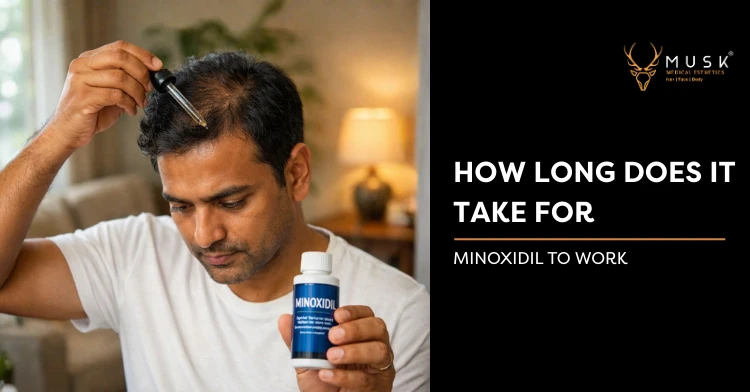
 If you have started using minoxidil or are thinking about it, you probably have one main question on your mind.
How long does it take for minoxidil to work?
You apply it daily, check the mirror often, and look closely for any sign of change.
When results do not show up quickly, it is easy to feel unsure or frustrated.
Minoxidil is one of the most widely used hair loss treatments in the US. It is recommended for both men and women and is available in topical and oral forms.
Even though it is popular, many people start using it without fully understanding how it works or how long results realistically take.
This often leads to unrealistic expectations and people quitting too early.
Hair growth is a slow biological process. Unlike skincare or supplements, hair treatments do not deliver instant results. Minoxidil works by affecting your hair growth cycle, not by creating hair overnight.
That is why patience and consistency are critical.
When you understand the timeline, you are more likely to stick with the treatment long enough to see real benefits.
In this guide, you will get a clear and honest breakdown of how long minoxidil takes to work.
What Is Minoxidil?
Minoxidil is a medication that was first developed to treat high blood pressure.
Doctors noticed that patients taking it experienced increased hair growth as a side effect.
This discovery led to the development of topical minoxidil for hair loss, which is now approved by the FDA for treating certain types of hair thinning.
Today, minoxidil is commonly used to treat androgenetic alopecia, also known as pattern hair loss. You can find it as a topical foam or liquid applied to the scalp.
In some cases, it is prescribed in low oral doses under medical supervision.
Minoxidil does not change your hormones or cure hair loss. Instead, it helps hair follicles function better while you are using it. This is an important distinction that affects how long you need to use it and what happens if you stop.
How Minoxidil Works on Hair Follicles
Your hair grows in cycles. Each follicle goes through a growth phase, a transition phase, and a resting phase.
In pattern hair loss, the growth phase becomes shorter, and follicles gradually shrink. This leads to thinner hair and eventually a visible scalp.
Minoxidil works by helping extend the growth phase of the hair cycle. It also increases blood flow to the scalp, which improves oxygen and nutrient delivery to hair follicles.
This creates a better environment for hair to grow thicker and stronger.
Another important effect of minoxidil is that it can help revive weakened follicles. These follicles are not dead, but they are underperforming. By improving their function, minoxidil gives them a chance to produce visible hair again.
Because minoxidil affects the hair cycle, results are not immediate. The follicles must complete a full cycle before changes become visible.
This is why consistency over several months is essential.
What Minoxidil Cannot Do
It is just as important to understand what minoxidil does not do.
Minoxidil cannot bring back hair in areas where follicles are completely inactive. If a follicle has been dormant for many years, it may not respond to treatment.
Minoxidil also does not permanently stop hair loss. It works only while you are using it. If you stop, the follicles that were supported by minoxidil return to their previous state.
This is why long-term use is usually necessary to maintain results.
Finally, minoxidil does not work overnight. Any product promising instant regrowth is misleading.
Hair growth is slow by nature, and realistic expectations are key to staying committed.
How Long Does Oral Minoxidil Take to Work?
Oral minoxidil is gaining attention because it works differently from topical solutions.
If you are using or considering oral minoxidil, the timeline can feel especially important.
You want to know when changes start and how long you need to stay consistent before judging results.
Oral minoxidil is a low-dose form of minoxidil taken by mouth under medical supervision. Unlike topical minoxidil, which works locally on the scalp, oral minoxidil works systemically. This means it reaches hair follicles through the bloodstream.
Because it circulates throughout your body, oral minoxidil does not depend on scalp absorption. This can be helpful if you have issues with topical irritation, poor absorption, or inconsistent application.
However, it must always be prescribed and monitored by a healthcare professional.
Oral minoxidil is considered an off-label treatment for hair loss in the US, which makes medical guidance especially important.
Factors That Affect Oral Minoxidil Results
Not everyone responds to oral minoxidil at the same speed. Dosage plays a major role.
Low doses are commonly used to balance effectiveness and safety. Your provider may adjust the dose based on how your body responds.
Your genetics, stage of hair loss, and overall health also influence results. Early-stage hair loss tends to respond better than advanced thinning. Consistency matters as well. Skipping doses can slow progress and affect outcomes.
Because oral minoxidil affects the whole body, regular follow-ups are important.
This ensures the treatment remains safe while giving your hair the best chance to respond.
How Long Does Topical Minoxidil Take to Work?
Topical minoxidil is the most common form people use for hair loss.
It comes as a foam or liquid and is applied directly to the scalp. Because it works locally, results depend heavily on how consistently and correctly you use it.
Understanding the timeline helps you avoid quitting too soon.
Topical minoxidil works by being absorbed through the scalp and acting directly on nearby hair follicles. It is available over the counter in different strengths and is approved by the FDA for certain types of hair loss.
You usually apply it once or twice daily, depending on the formulation and instructions.
Foam and liquid versions work similarly, but some people find foam easier to apply and less irritating.
What matters most is regular use.
Skipping applications slows progress and makes results harder to see.
Early Phase (Weeks 1–4)
During the first few weeks, you may not see any visible improvement.
In fact, you might notice more hair shedding than usual. This can feel discouraging, but it is a common and expected response.
This early shedding happens because minoxidil pushes resting hairs out so new growth can begin. These hairs were already on their way out. Minoxidil simply speeds up the process. Not everyone experiences shedding, but if you do, it usually means the treatment is activating your follicles.
Your scalp may also feel slightly dry or itchy at first. This often improves as your scalp adjusts.
Medium Phase (Months 2–4)
Between months two and four, shedding usually slows down.
This is when many people notice less hair falling during washing or brushing. While visible regrowth may still be subtle, the foundation for new hair is forming.
You may notice changes in hair texture. New hairs often start out finer and lighter in color. This is normal. These hairs can thicken and darken over time as they mature through repeated growth cycles.
This phase tests patience, but it is where consistency pays off.
Long-Term Phase (Months 6–12)
Between six and twelve months, topical minoxidil results become more noticeable for many users.
Thinning areas may look fuller, and overall hair density can improve.
The crown area often responds better than the frontal hairline, but individual results vary.
Around the twelve-month mark, you typically reach peak results. After this point, minoxidil helps maintain what you have gained rather than creating dramatic new growth.
If you stop using topical minoxidil, the benefits usually fade over time.
This is why long-term use is important for maintaining results.
Minoxidil Results Timeline
Understanding the full minoxidil results timeline helps you stay consistent and confident in the process.
Hair regrowth does not happen all at once. It follows a gradual pattern, and each stage plays an important role.
When you know what typically happens month by month, you are less likely to panic, overanalyze, or stop too early.
1. Minoxidil Results After 1 Month
After one month of using minoxidil, most people do not see visible hair regrowth.
This is normal.
At this stage, the medication is working below the surface, influencing hair follicles and adjusting the growth cycle.
You may notice increased shedding during this time. While this can feel alarming, it is often a sign that older hairs are being pushed out to make room for new growth. The scalp is essentially resetting. Some people also notice mild scalp dryness or irritation, especially with topical use.
The most important thing at this stage is consistency.
Missing applications or stopping due to shedding can delay or reverse progress before it truly begins.
2. Minoxidil Results After 3 Months
By the three-month mark, many people start to see small but meaningful changes.
Hair shedding often slows down compared to the first few weeks. This alone can feel like a win, especially if hair fall was heavy before starting treatment.
You may begin to notice very fine hairs in thinning areas. These hairs are often lighter and softer than your existing hair. This is a normal part of regrowth. These early hairs are not the final result, but they indicate that follicles are responding.
Not everyone sees visible regrowth at three months, and that is still within a normal range.
Progress at this stage is often subtle and easy to miss unless you compare photos over time.
3. Minoxidil Results After 6 Months
Six months is a key milestone for minoxidil users.
By this point, many people see noticeable improvements.
Hair may look thicker, fuller, and healthier in areas that responded to treatment.
Thinning spots may appear less visible, especially under normal lighting.
New hairs that appeared earlier often begin to mature. They can grow longer, darker, and stronger. Hair shedding is usually much lower than before treatment began.
If you are not seeing any changes at all by six months, this is often the time to reassess with a professional. That does not always mean minoxidil is failing, but it may mean adjustments are needed.
4. Minoxidil Results After 12 Months
Around twelve months, most people reach peak results from minoxidil.
This is when the full benefit of consistent use becomes clear. Hair density tends to stabilize, and improvements achieved earlier are more defined.
At this stage, minoxidil works mainly as a maintenance treatment. It helps preserve the hair you have regrown and slows further thinning. Dramatic new growth beyond this point is less common, but ongoing use is critical to maintain results.
If you are happy with your progress at twelve months, continuing treatment helps protect those gains.
If results are limited, this is the right time to explore additional options.
What Happens If I Stop Using Minoxidil?
This is one of the most important things to understand before starting minoxidil.
The results you get from minoxidil are not permanent if you stop using it. Minoxidil works by supporting hair follicles while it is actively in your system.
Once that support is removed, the follicles gradually return to their previous state.
Why Minoxidil Results Are Not Permanent
Minoxidil does not cure the underlying cause of most hair loss, especially pattern hair loss.
Instead, it helps follicles stay in the growth phase longer and improves their ability to produce visible hair.
As long as you keep using minoxidil, that support continues.
When you stop using minoxidil, the follicles that depended on it no longer receive that stimulation. Over time, they begin to shrink again and return to the same growth pattern they had before treatment.
This is why minoxidil is considered a long-term or ongoing treatment.
Timeline After Stopping Minoxidil
If you stop using minoxidil, changes do not happen overnight.
Most people begin to notice increased shedding within two to three months after stopping.
This shedding usually affects the hair that was maintained or regrown with minoxidil.
Over the next few months, hair density often returns to what it would have been if you had never used minoxidil. This can feel discouraging, especially after investing time and effort into treatment, but it is a predictable outcome.
The speed of hair loss after stopping depends on how long you used minoxidil and how sensitive your follicles are to hair loss triggers.
Some people notice changes faster than others.
Can Results Be Maintained Without Minoxidil?
In most cases, hair regrown with minoxidil cannot be maintained without ongoing treatment.
Once minoxidil is discontinued, the benefits gradually fade. This is why many people choose to continue long-term use once they see results.
If long-term use feels overwhelming, it is important to talk to a professional before stopping.
In some cases, alternative or complementary treatments may help support hair health, but expectations should remain realistic.
Hair Growth Alternatives to Minoxidil
Minoxidil is a popular option, but it is not the only way to address hair loss.
If minoxidil does not work for you or does not fit your long-term goals, there are other treatments worth considering.
The right alternative depends on the cause of your hair loss, how advanced it is, and how your body responds to treatment.
Exploring alternatives does not mean you have failed.
It means you are adjusting your strategy to find what works best for you.
Prescription Treatments
Some hair loss treatments focus on addressing the underlying causes rather than stimulating follicles alone.
Prescription options are often used when hair loss is driven by hormonal factors, especially in pattern hair loss.
These treatments may help slow further thinning and support existing hair. In many cases, they are used alongside minoxidil rather than replacing it completely. Combining treatments under medical supervision often leads to better long-term outcomes.
Because prescription treatments affect internal processes, they should only be used after professional evaluation.
This ensures the treatment is appropriate and monitored for safety.
Non-Medication Options
Not all hair loss treatments involve medication.
Some approaches focus on improving scalp conditions or stimulating follicles through external methods.
These options are often considered when medication alone does not deliver enough improvement.
Non-medication treatments may help create a healthier environment for hair growth. They are typically part of a broader treatment plan rather than a standalone solution. Results vary, and consistency remains important.
These options are usually recommended after confirming the type and severity of hair loss.
Lifestyle and Supportive Strategies
Your daily habits play a bigger role in hair health than many people realize.
Nutrition, stress levels, and scalp care all affect how well your hair grows and how it responds to treatment.
Poor nutrition can limit your body’s ability to produce strong hair. High stress levels can trigger or worsen shedding. An unhealthy scalp can reduce the effectiveness of any treatment you use.
While lifestyle changes alone rarely reverse hair loss, they can support medical treatments and improve overall results. Think of them as part of the foundation rather than a quick fix.
Exploring alternatives gives you more control over your hair loss journey.
The next step is understanding how to choose the best treatment plan for your specific situation.
Get the Best Treatment for Your Hair Loss
Finding the right hair loss treatment is not about choosing the most popular option.
It is about choosing the option that fits your hair loss pattern, your goals, and your lifestyle.
When treatment is aligned with your situation, results are more predictable and easier to maintain.
Start With the Right Diagnosis
Hair loss can look the same on the surface while having very different causes underneath.
Pattern hair loss, stress-related shedding, and medical conditions all require different approaches.
Treating the wrong cause often leads to slow or disappointing results.
A proper diagnosis helps ensure that treatments like minoxidil are being used for the right reason and in the right way.
Focus on Personalization, Not Guesswork
Hair loss treatment works best when it is personalized. This includes:
- Choosing topical, oral, or combination therapy based on your needs
- Adjusting dosage and application methods
- Matching treatment intensity to the stage of hair loss
What works for someone else may not work the same way for you. Personalization removes unnecessary trial and error.
Track Progress the Right Way
Hair growth happens slowly, and daily mirror checks can be misleading.
Progress is easier to measure when you:
- Use baseline photos
- Track changes every few months
- Look for trends instead of daily changes
This approach helps you stay patient and avoid stopping treatment too early.
Choose a Plan You Can Maintain Long Term
Most hair loss treatments require consistency over time.
The best treatment plan is one that fits into your routine without feeling overwhelming. If a plan is too complicated or unrealistic, it becomes harder to stick with it.
A sustainable plan leads to better long-term results.
Choosing the right treatment puts you back in control of your hair loss journey.
When your plan is based on accurate information and realistic expectations, you are far more likely to see progress and keep it.
Conclusion
Minoxidil can be an effective hair loss treatment, but only when you understand how it works and give it enough time.
Hair regrowth is a slow process, and real results depend on consistency, patience, and using the right approach for your specific type of hair loss. When expectations are realistic, it becomes much easier to stay committed and measure progress correctly.
That said, minoxidil is not a one-size-fits-all solution. Your age, genetics, stage of hair loss, and overall scalp health all play a role in how well it works for you.
If results feel slower than expected or unclear, expert guidance can make a meaningful difference.
At Musk Clinic, hair loss treatment is never generic. Each plan is built around your individual needs, whether that includes minoxidil, combination therapy, or alternative options. The focus is on accurate diagnosis, realistic timelines, and treatments you can actually maintain long term.
Frequently Asked Questions (FAQs)

Dr. Anand B. Shah
- 10 Years of Experience
Dr Anand B. Shah, is a board-certified Maxillofacial & Craniofacial surgeon who is highly skilled in cosmetic facial and hair restoration surgery and has exclusively practised the same, internationally and nationally.