






What Are the Side Effects of Hair Transplant? Key Risks & How to Avoid Them

 By Dr. Anand Shah
 Key Takeaways
- Is It Safe? Yes, hair transplants are very safe when performed by a qualified, board-certified surgeon in a sterile, professional clinic.
- Normal vs. Risk: Most "side effects" like swelling, itching, and scabbing are just normal, temporary parts of the healing process.
- The Scariest Part: "Shock loss" (where hair falls after 2-8 weeks) is common, temporary, and a normal part of the hair's growth cycle. It is not a sign of failure.
- Avoidable Risks: Serious, long-term risks like unnatural results, visible scarring, or graft failure are almost 100% avoidable by choosing the right expert and clinic.
- Your Action Plan: The 3-step plan to ensure a safe, successful result is:
1) Choose your surgeon wisely,
2) Follow all pre-op instructions, and
3) Be perfect with your post-op aftercare.
Thinking about a hair transplant? You're not alone. It's one of the most effective and popular ways to permanently restore your hair and confidence. But just like any medical procedure, it's completely normal to have questions. The biggest one we hear is: "Is it safe, and what are the side effects?"
Let's answer that right away: Yes, when done by a qualified professional in a high-quality clinic, hair transplants are overwhelmingly safe and successful.
A hair transplant is still a surgical procedure, so it's important to understand what to expect. The key is knowing the difference between a normal side effect (which is just your body healing) and a true risk or complication.
This guide will walk you through everything in simple, easy-to-understand terms. We'll cover the basics, the common healing signs, the potential risks, and the simple, actionable steps you can take to get a safe, natural-looking, and fantastic result.
What Is a Hair Transplant?
Before we talk about side effects, let's quickly cover what a hair transplant is.
In the simplest terms, a hair transplant is a medical procedure that moves your own, healthy hair follicles. A surgeon takes them from a dense area of your scalp (called the "donor site," usually the back and sides of your head) and moves them to a thinning or bald area (the "recipient site").
The hair on the back of your head is genetically resistant to the hormone that causes male pattern baldness. This is why it's a permanent solution—the transplanted hair keeps its original genetic properties and will continue to grow for a lifetime in its new location.
The 2 Main Types You Need to Know: FUE vs. FUT
There are two primary methods to get these hair follicles, and the one you choose can slightly affect the healing process and potential side effects, especially scarring.
1. FUE (Follicular Unit Excision)
- What it is: This is the "one-by-one" method. The doctor uses a tiny, precise tool to extract individual hair follicles (groups of 1-4 hairs) directly from the donor area.
- Benefits: The biggest advantages are that it does not leave long, linear scars, and the healing time is generally faster.
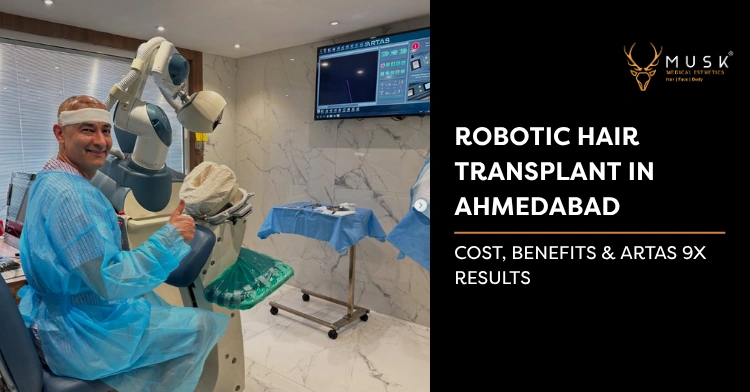
- Modern FUE: At clinics like Musk, this is taken a step further with technologies like the ARTAS 9X Robotic System. This robotic system uses AI to precisely harvest follicles, which can increase accuracy up to 99% and minimize damage to the surrounding hairs.
2. FUT (Follicular Unit Transplantation)
- What it is: This is the "strip" method. The surgeon removes a small, thin strip of skin from the donor area. That strip is then given to a team of technicians who carefully separate the individual follicles under a microscope.
- Benefits: The main benefit of FUT is that a surgeon can often get a very large number of grafts in a single session.
- The Downside: This method always leaves a thin, linear scar in the donor area. While a skilled surgeon can hide it well within the remaining hair, it will be visible if you shave your head.
Here’s a quick comparison to help you understand the differences in their common side effects.
| Feature | FUE (Follicular Unit Excision) | FUT (Follicular Unit Transplantation) |
|---|---|---|
| Method | Individual follicles are extracted one by one. | A strip of skin is removed, then dissected. |
| Scarring | Tiny, dot-like scars scattered over a large area. Generally, unnoticeable. | A single, thin linear scar at the donor site. |
| Healing Time | Faster. Less discomfort. | Slower. Requires more care for the stitched area. |
| Primary Risk | Risk of "over-harvesting" if done by an unskilled team, creating a "moth-eaten" look. | Risk of a stretched or visible scar if closed improperly or with poor aftercare. |
Common Short-Term Side Effects (The Normal Healing Process)
This is the most important section to read. Most of the "side effects" people worry about are just the normal, temporary, and expected signs that your body is healing. These are almost always temporary and resolved on their own.
1. Swelling (Oedema) and Mild Pain
- Where: You might experience some swelling on your forehead and around your eyes. This is perfectly normal.
- When: It usually peaks around 3-5 days after the procedure. It's just your body's natural response to the procedure and the local anesthesia. Gravity pulls the fluid down, which is why it settles on your forehead.
- What to do: Sleeping with your head elevated on a few pillows for the first few nights is the best way to reduce this. Mild pain or discomfort is easily managed with the pain medication your clinic provides.
2. Itching and Scabbing
- Why: Tiny scabs will form over each newly transplanted graft. This is a good sign! It means your body is protecting the new follicles as they heal. As these scabs dry, your scalp will get very itchy.
- The Golden Rule: You must NOT scratch or pick the scabs. Picking them can pull out the new graft, causing it to fail.
- What to do: Your clinic will provide a special saline spray or shampoo to gently clean the area. This will help soften the scabs and relieve the itch without you ever having to touch your head.
3. Redness and Soreness
- Why: Your scalp (both the donor and recipient areas) just went through a medical procedure. It's normal for it to look red, like a mild sunburn, and feel tender for several days.
- When: The redness in the recipient area can last for a few weeks as the new blood supply forms, but the soreness should fade within a few days.
4. Temporary Numbness
- Why: The procedure, especially the local anesthesia, can temporarily irritate the tiny nerves in your scalp.
- What to expect: You might feel a temporary numbness or a "pins and needles" sensation in the donor or recipient area. This is almost always temporary, and a normal feeling will return over the next few weeks or months as the nerves heal.
5. Minor Bleeding
- Why: This is a minimally invasive procedure, but there are tiny incisions.
- What to expect: It is not uncommon to see a little bit of spotting or light bleeding on your pillowcase or the headband the clinic provides for the first night or two. This is minor and stops very quickly.
The Most Alarming (But Normal) Side Effect: Shock Loss
This side effect gets its own section because it's the one that scares patients the most, even though it's completely normal and temporary.
What is Shock Loss?
Around 2 to 8 weeks after your surgery, you will likely see many of your newly transplanted hairs fall out. You might also see some of your original native hair in the area shed as well. This is called "Shock Loss" or "Shedding."
Why It's Not a Disaster
This is NOT a sign that the transplant has failed. Think of it this way: the hair follicle is the "factory," and the hair is the "product." The surgery moves the factory; it doesn't move the product.
The "shock" of the procedure causes the follicles to temporarily go into a resting (telogen) phase. They drop the current hair shaft to conserve energy.
The most important part—the follicle itself—is safe and sound under the skin, settling into its new home. After a resting period of 3-4 months, it will wake up and begin to grow new, healthy, and permanent hair. This is the new growth you've been waiting for. So, if you see shedding, don't panic! It's a normal and necessary part of the journey.
Less Common Side Effects and Risks (What to Watch For)
These side effects are less common, and in a high-quality, sterile clinic, they are very rare. But it's good to know what they are.
Infection
- Risk: In a modern, professional clinic that follows strict hygiene and sterilization protocols, the risk of infection is extremely low (less than 1%).
- Symptoms: If you were to get an infection, you would notice signs like excessive pus, severe redness that gets worse instead of better, persistent pain, or a fever.
- Prevention: This is why your clinic will give you a course of antibiotics to take for the first few days after your procedure. Following their instructions is key.
Folliculitis (Pimples on the Scalp)
- What it is: You might see a few small, red, or white-headed pimples in the transplanted area a few months after the procedure. This is called folliculitis.
- Why it happens: It's usually just some minor inflammation or an ingrown hair, which happens as the new, coarse hair shaft pushes its way through the skin for the first time.
- Treatment: It's typically very easy to treat with a warm compress or a simple antibiotic cream provided by your doctor. Don't try to pop them.
Cysts
- What they are: In rare cases, a few small, pea-sized lumps or cysts can form if a graft is accidentally pushed under the skin during implantation.
- Treatment: These are harmless and usually go away on their own within a few weeks. If one is persistent, your doctor can easily and quickly treat it.
Long-Term & Serious Risks (And How They Are Avoided)
Now we are moving from "normal healing" to "real risks." These are the negative outcomes that people fear, like a bad, unnatural-looking transplant.
The most important thing to know is this: These risks are almost 100% avoidable by choosing the right, highly skilled, and board-certified surgeon. These problems are not side effects of hair transplants; they are side effects of bad hair transplants.
Unnatural-Looking Results
- The Fear: This is the "pluggy" or "doll's hair" look that everyone is afraid of from older, outdated procedures.
- Why it happens: This is purely a result of an unskilled or inexperienced surgeon. They may use the wrong type of grafts in the hairline (e.g., thick, multi-hair grafts instead of soft, single-hair grafts) or place them at the wrong angle and direction.
- How to avoid it: A hair transplant is not just a technical procedure; it's an art. A great surgeon, like a board-certified Maxillofacial and Craniofacial surgeon, has a deep understanding of facial aesthetics. They will design a soft, natural, and age-appropriate hairline that matches your facial structure and hair-growth pattern.
Visible Scarring
- FUT Scar: The FUT "strip" method will always leave a thin, linear scar at the back of your head. A good surgeon is skilled at closing the wound to create a very fine scar that is easily hidden by the surrounding hair (if you don't shave your head). A bad surgeon can leave a wide, stretched scar.
- FUE Scars: The FUE method leaves tiny, dot-like scars. The major risk here is "over-harvesting." An aggressive or unskilled technician might take too many grafts from one small area, creating a "moth-eaten," patchy, or thinned out look in the donor area. A great clinic, especially one using robotics like ARTAS, plans the harvest to protect the long-term look of the donor area.
Graft Failure (Poor Density)
- What it is: This is when the transplanted hair just doesn't grow, leaving you with poor, thin results.
- Why it happens: This has two main causes:
- Clinic Error: The grafts are very delicate. If the surgical team handles them roughly, leaves them out of their special solution for too long, or damages them during implantation, they will not survive. A high-quality clinic has a high graft success rate (often 95-100%) because its team is experienced and follows strict protocols21.
- Patient Error: The patient did not follow aftercare rules. Scratching, picking scabs, smoking, or doing heavy exercise too soon can all kill the new grafts.
Continued Hair Loss
- An Important Point: A hair transplant does not stop male or female pattern baldness.
- What this means: The transplanted hair is permanent. However, your original, native hair in the surrounding areas may continue to thin or fall out over time.
- The Solution: This is why a good doctor doesn't just do a transplant; they create a long-term plan. This plan might include medical treatments like Finasteride or Minoxidil, or non-surgical treatments like PRP (Platelet-Rich Plasma) therapy, to protect your native hair and maintain your overall look for years to come.
The 3-Step Guide: How to Avoid Hair Transplant Side Effects
This is the most important, actionable part of the entire guide. If you are worried about risks, just follow these three simple steps.
Step 1: Choose Your Surgeon Wisely (The #1 Rule)
This single decision solves 90% of all potential long-term risks. An expert surgeon and a high-quality clinic will prevent unnatural results, minimize scarring, and ensure high graft survival.
- Look for Credentials: Don't just look for a "hair doctor." Look for a board-certified surgeon (e.g., in Maxillofacial or Craniofacial surgery) with extensive training. At Musk Clinic, for example, our founder, Dr. Anand B. Shah, is a board-certified surgeon with extensive international training under the pioneers of the field. This level of expertise is what you should seek.
- Look at Technology: Does the clinic invest in the best, safest technology? A clinic that uses USFDA-approved technologies, like the ARTAS 9X Robotic Hair Transplant, is showing a commitment to safety and precision.
- Check Real Reviews: Look for clinics with hundreds of positive, verified patient reviews across multiple platforms. These reviews give you an honest look at the patient's experience.
- Warning: Avoid "black market" clinics or "too-good-to-be-true" prices. A very low price often means they are cutting corners on safety, hygiene, or surgeon skills. This is not where you want to save money.
Step 2: Follow All Pre-Surgery Instructions
Your clinic will give you a list of rules to follow before your procedure. These are designed to make the surgery safer and more effective. They will likely include:
- Stopping smoking and vaping for at least a week, as nicotine constricts blood flow and dramatically slows healing.
- Stopping alcohol consumption for a few days.
- Stopping any blood-thinning medications or supplements (like Aspirin, Ibuprofen, or Vitamin E) as advised by your doctor.
Step 3: Be Perfect with Your Post-Surgery Aftercare
Your surgeon's instructions for the first 1-2 weeks are law. The grafts are very fragile during this time. Following these rules is your responsibility and is essential for a great result.
This is a simple breakdown of the "Do's" and "Don'ts."
| Your Aftercare Checklist | DO (To Promote Healing) | DON'T (To Prevent Failure) |
|---|---|---|
| Sleeping | DO sleep with your head elevated on 2-3 pillows for 5-7 nights to reduce swelling. | DON'T sleep flat. DON'T let the new grafts touch the pillow. |
| Cleaning | DO wash your hair exactly as the clinic shows you, using a gentle patting motion. | DON'T rub, scratch, or pick at the scabs. This is the #1 way to kill a graft. |
| Activity | DO take it easy for the first week. Light walking is fine. | DON'T do any heavy exercise, lifting, or bending over for at least 1-2 weeks. |
| Substances | DO take all your antibiotics and medications as prescribed. |
DON'T smoke or drink alcohol, as they are terrible for healing and graft survival. |
| Environment | DO protect your scalp. |
DON'T get direct, strong sun on your scalp for the first few months. |
Conclusion: A Safe Procedure and a Smart Decision
A hair transplant is a very safe, effective, and life-changing procedure when done correctly.
For 99% of patients, the "side effects" they talk about are just the normal, temporary, and predictable parts of the healing process: swelling, scabs, and itching. These are signs that your body is doing its job.
The serious, long-term risks you might worry about—like unnatural results, bad scars, or failed growth—are not really risks of the procedure itself. There are risks of choosing the wrong clinic.
You can avoid almost every single risk by making one smart decision:
Choose a high-quality, board-certified surgeon + Follow their aftercare instructions = A safe and fantastic result.
At Musk Clinic, our entire philosophy is built on this foundation of safety, expertise, and patient-centric care. We combine the artistic vision of our internationally trained surgeons with the precision of world-class, USFDA-approved technology to deliver results that are not only safe but truly natural.
If you are ready to take the next step in your hair restoration journey, we invite you to book a consultation with our expert team. We're here to answer all your questions and help you restore your hair and your confidence, safely.
Frequently Asked Questions (FAQs)

Dr. Anand B. Shah
- 10 Years of Experience
Dr Anand B. Shah, is a board-certified Maxillofacial & Craniofacial surgeon who is highly skilled in cosmetic facial and hair restoration surgery and has exclusively practised the same, internationally and nationally.